Pour Over — building flavor with the speed of your pour
2026-10-21
Pour Over means lining a dripper with a paper filter, adding ground coffee and pouring hot water over it to drip through. The paper catches coffee oils and fine particles, giving a clean cup with a clear outline. It makes differences in origin and process easy to taste, and suits checking the character of a Washed lot.
It began with a paper filter
Brewing with a paper filter is said to have begun with a filter devised by Melitta Bentz in Germany in 1908. In an age of filtering through cloth or metal, the idea of filtering through paper spread a cleaner way of enjoying coffee.
Dripper shapes
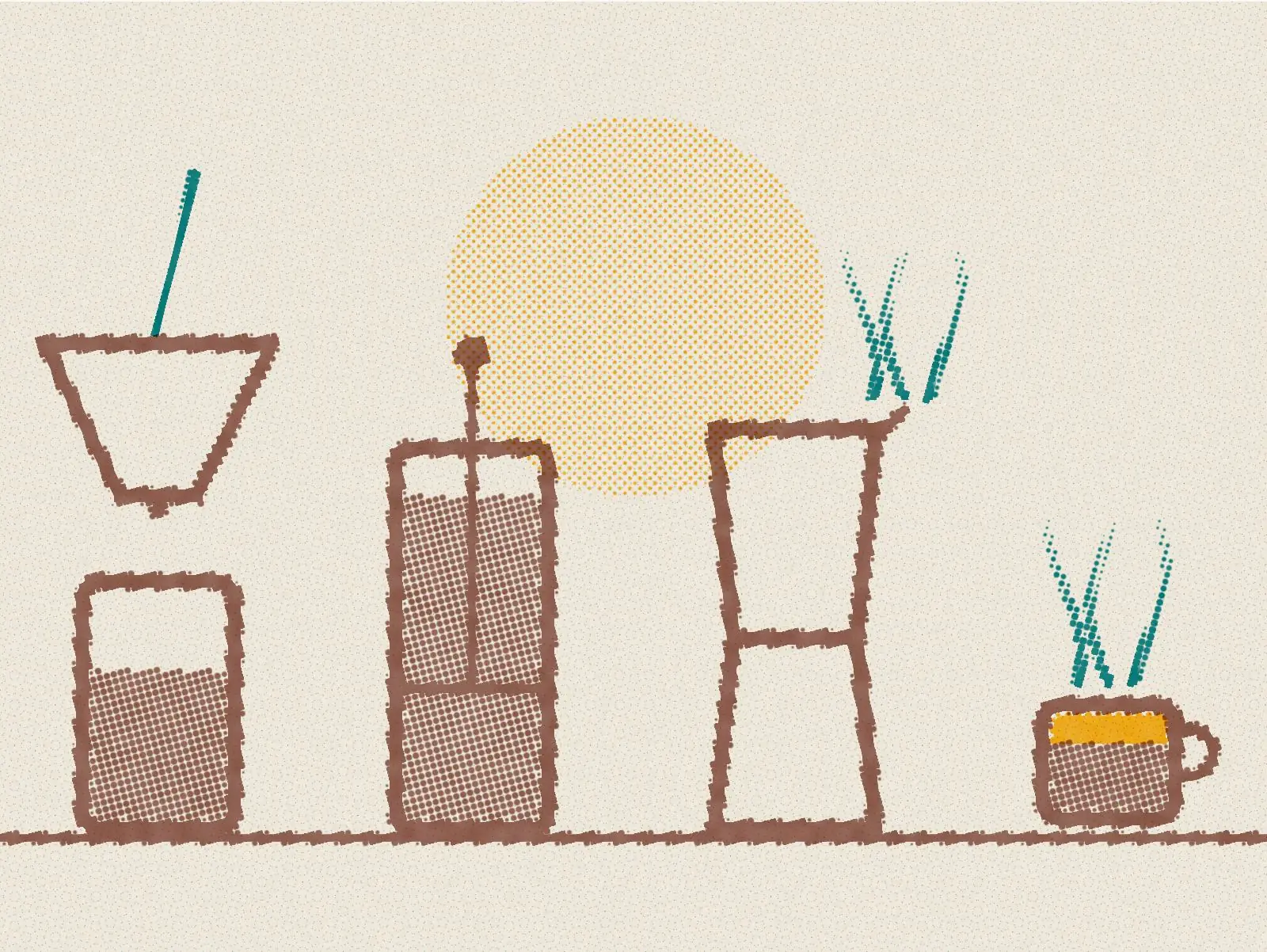
How water drains changes with the dripper's shape and number of holes. Typical examples are a cone with one large hole (such as the V60) and a flat-bottomed shape with three holes (such as the Kalita Wave).
Drippers
The dripper's shape decides how water drains
Cone
One large hole
Drains fast; pouring speed easily changes the taste
Wedge
Small hole
The hole holds water back for a slow, steady drip
Flat bottom
Three holes
A flat bed of coffee helps extraction stay even
An example recipe
15g of coffee to 250g of water, at 92–94°C. That is a ratio of about 1:16.7. Aim for around three minutes in total.
Recipe
Pour Over, step by step (an example)
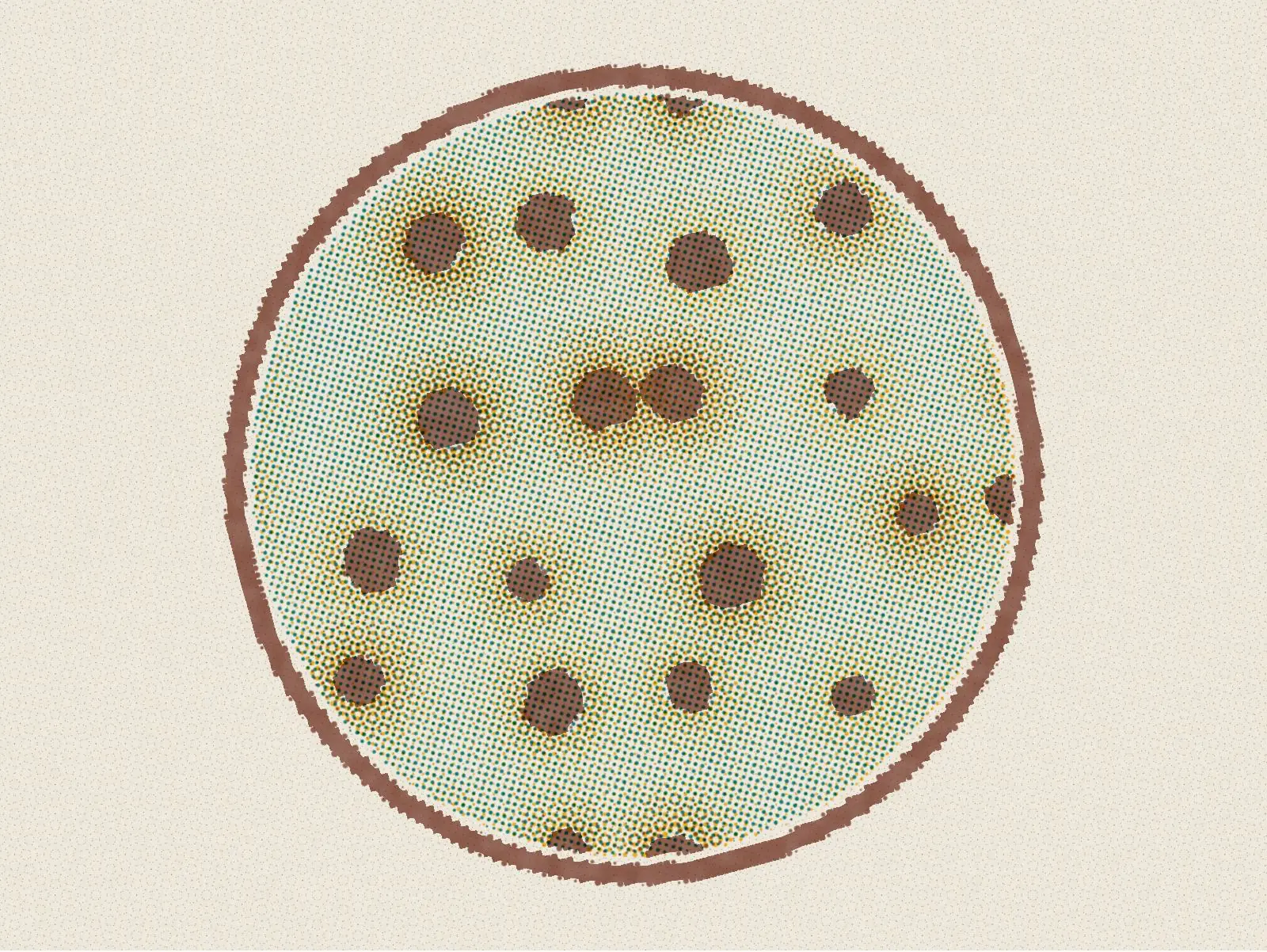
Level the coffee
15g, medium-fine
Bloom
0:00–0:40
Wet all the grounds with about twice their weight in water
Pour
0:40–1:10
Up to 150g, small circles from the center
Pour
1:10–1:50
Up to 250g
Let it drain
to about 3:00
A flat bed of grounds is a good sign
Pouring
How the poured water adds up (an example)
Why bloom
You pour a small amount of water first and wait in order to release the carbon dioxide in the roasted beans. The fresher the roast, the more the grounds swell and bubble when water hits them. If you keep pouring before the gas has escaped, the water does not reach the grounds evenly, and extraction becomes uneven.
How to adjust
If it is sour and thin, grind finer or raise the water temperature. If it is bitter and astringent, grind coarser or lower the temperature. If it takes too long to drain, the grind is usually too fine or you are pouring too much.
What moves when you change what is gathered in Brewing basics. Comparing brew methods sets out the differences from other methods in diagrams.