Journal
Coffee species and varieties, processing, and the history of origins. We write down what lies behind each cup, as concretely as we can.
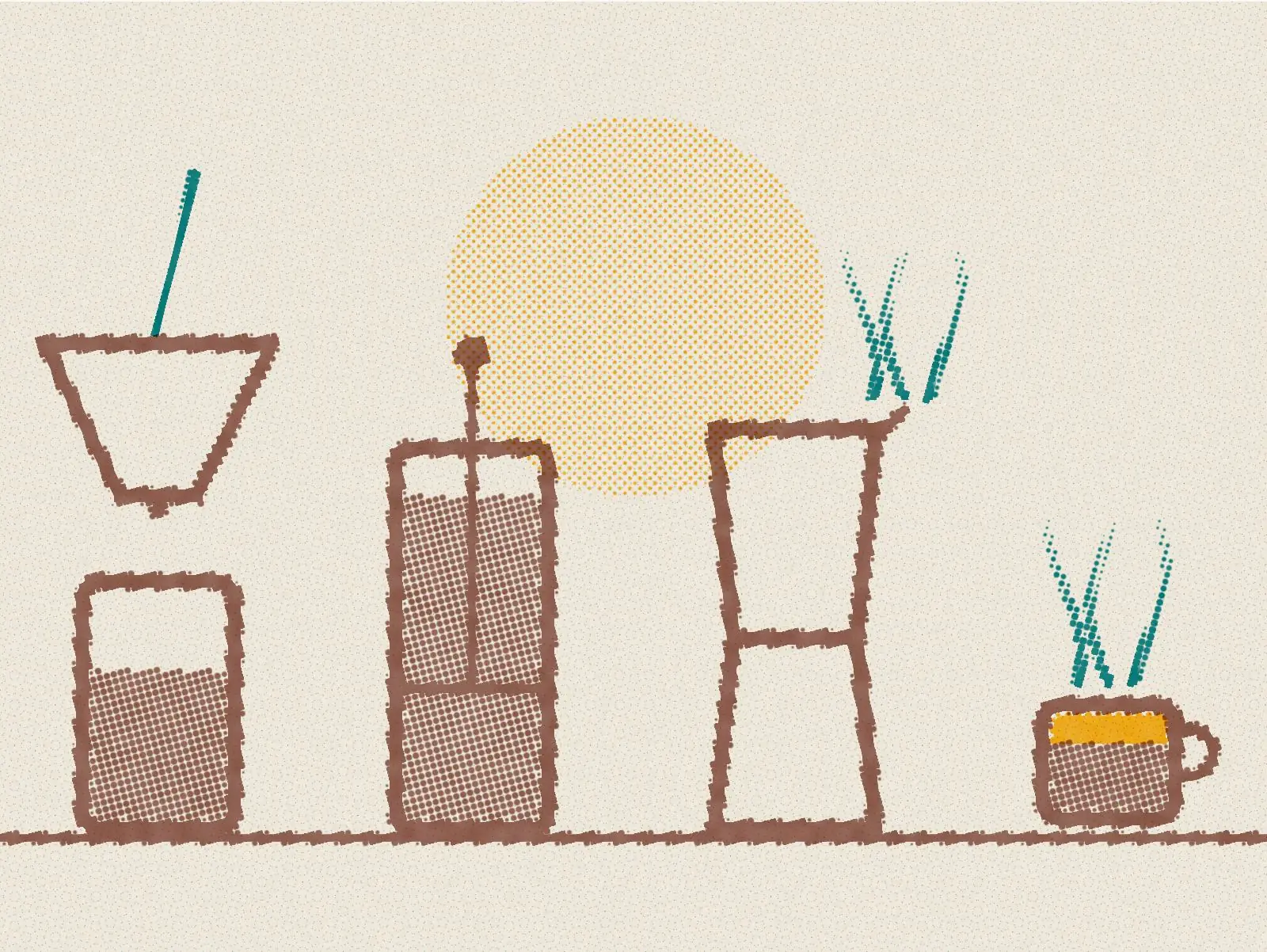
Comparing brew methods — mechanism, time and temperature, grind, filter
Pour Over, French Press, Espresso, Phin. Seven brew methods compared from four angles: mechanism, time and temperature, grind and filter.
Brewing basics — strength and extraction
Four things shape a cup: the ratio of coffee to water, grind, time and temperature. What moves when you change what, sorted out with diagrams and a calculator.
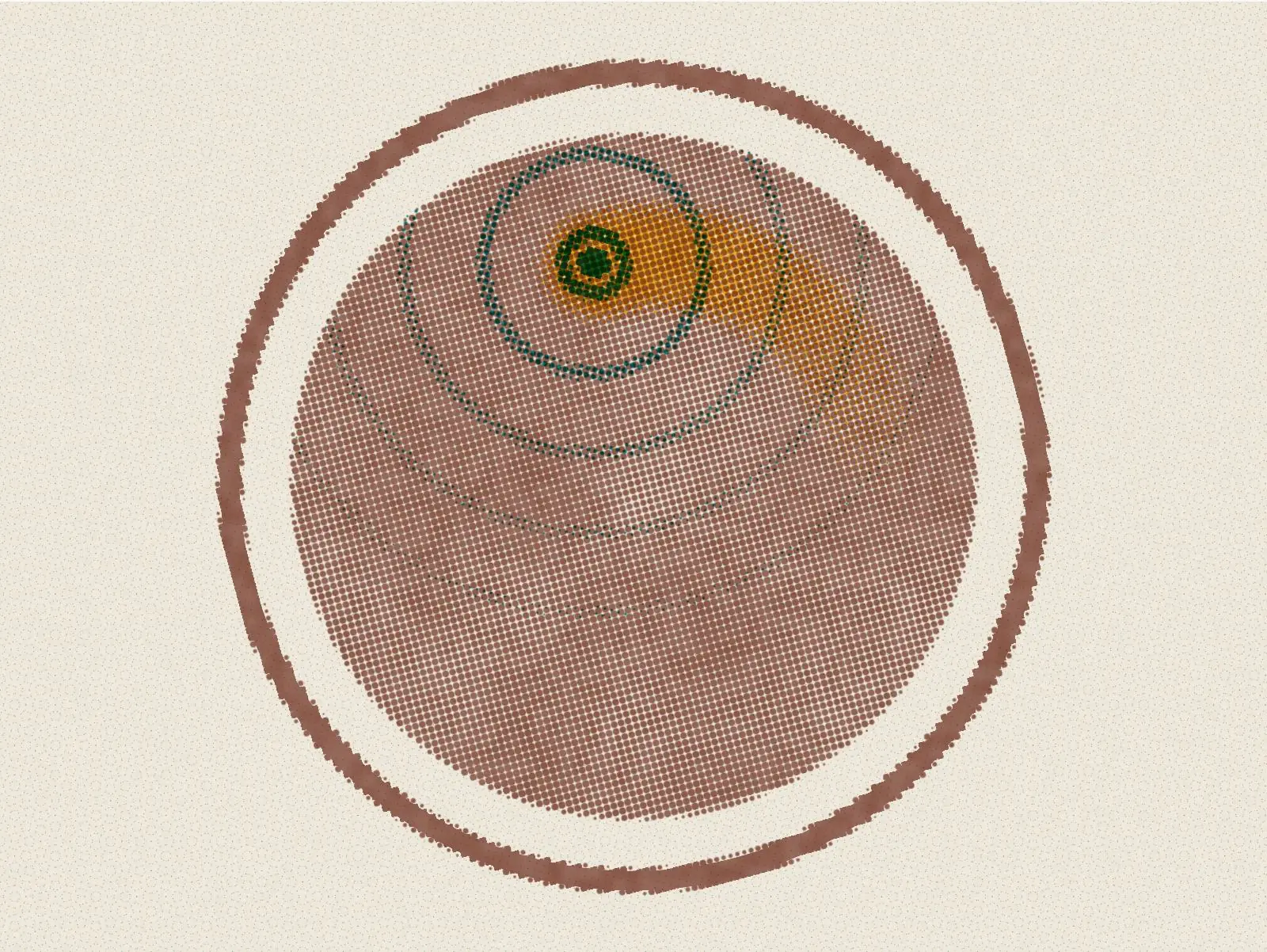
Pour Over — building flavor with the speed of your pour
Water poured a little at a time through a paper filter. Because you pour by hand, you can build the timing and flow yourself.
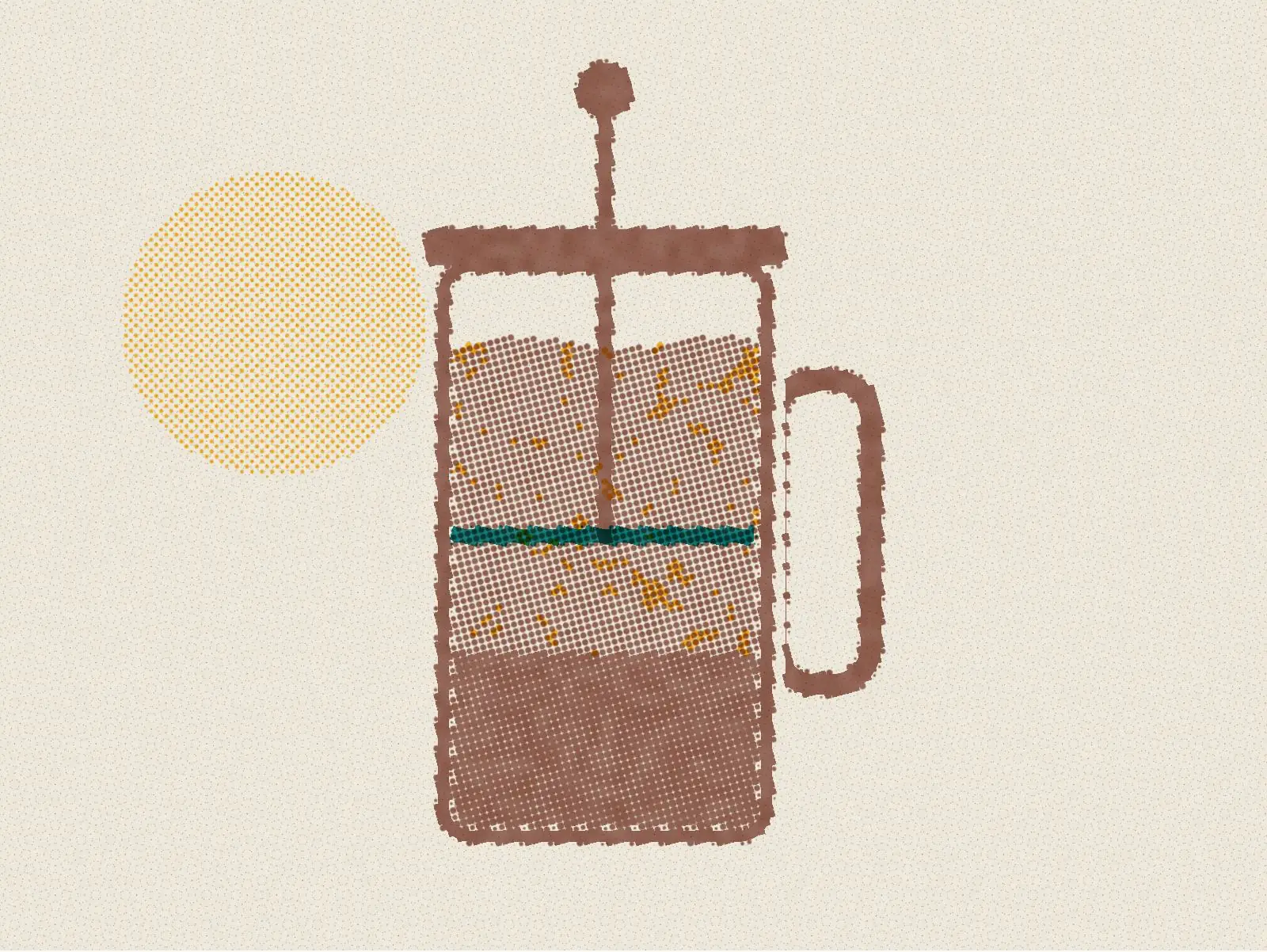
French Press — steep, press, pour
Steep the grounds in water, then filter through metal mesh. No pouring technique needed, and you taste everything down to the bean's oils.
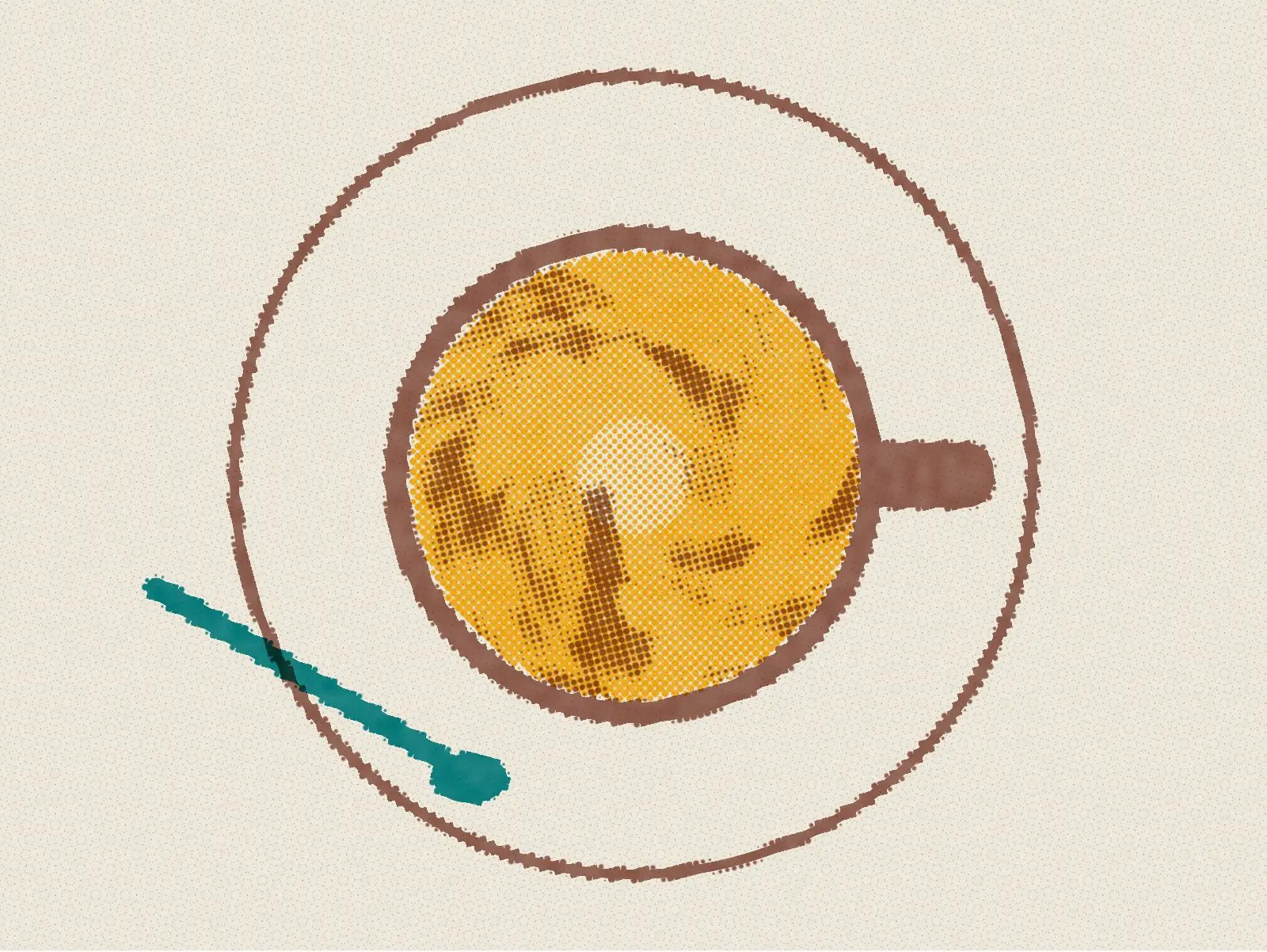
Espresso — short and strong, under pressure
About 9 bar of pressure for 25–30 seconds. A method that pulls a strong cup in a short time, with a wide range of expression in exchange for precision.
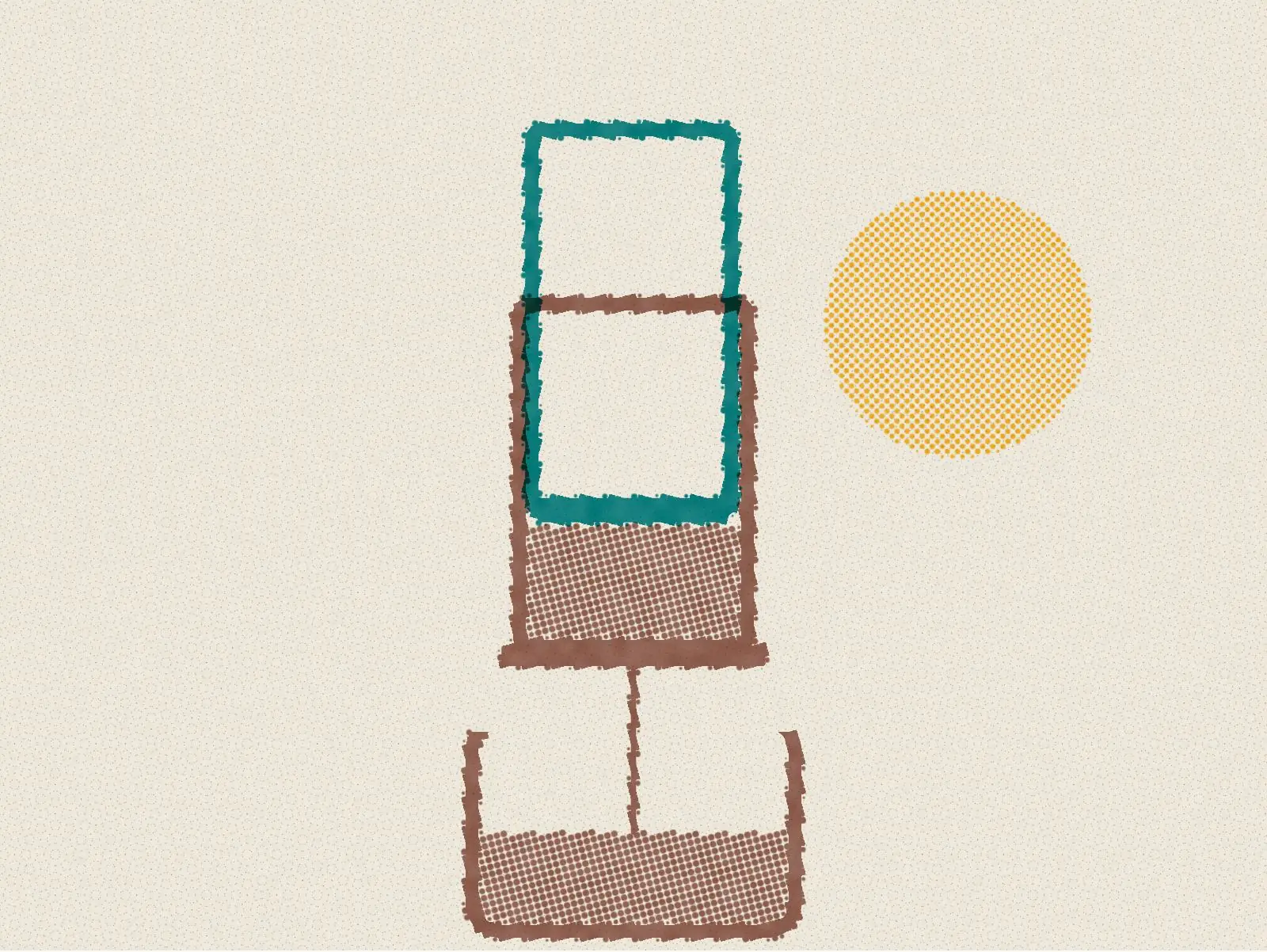
AeroPress — steep, then press by hand
A brewer from 2005 made of just a tube and a plunger. It combines steeping with pressing to brew a clean cup in a short time.
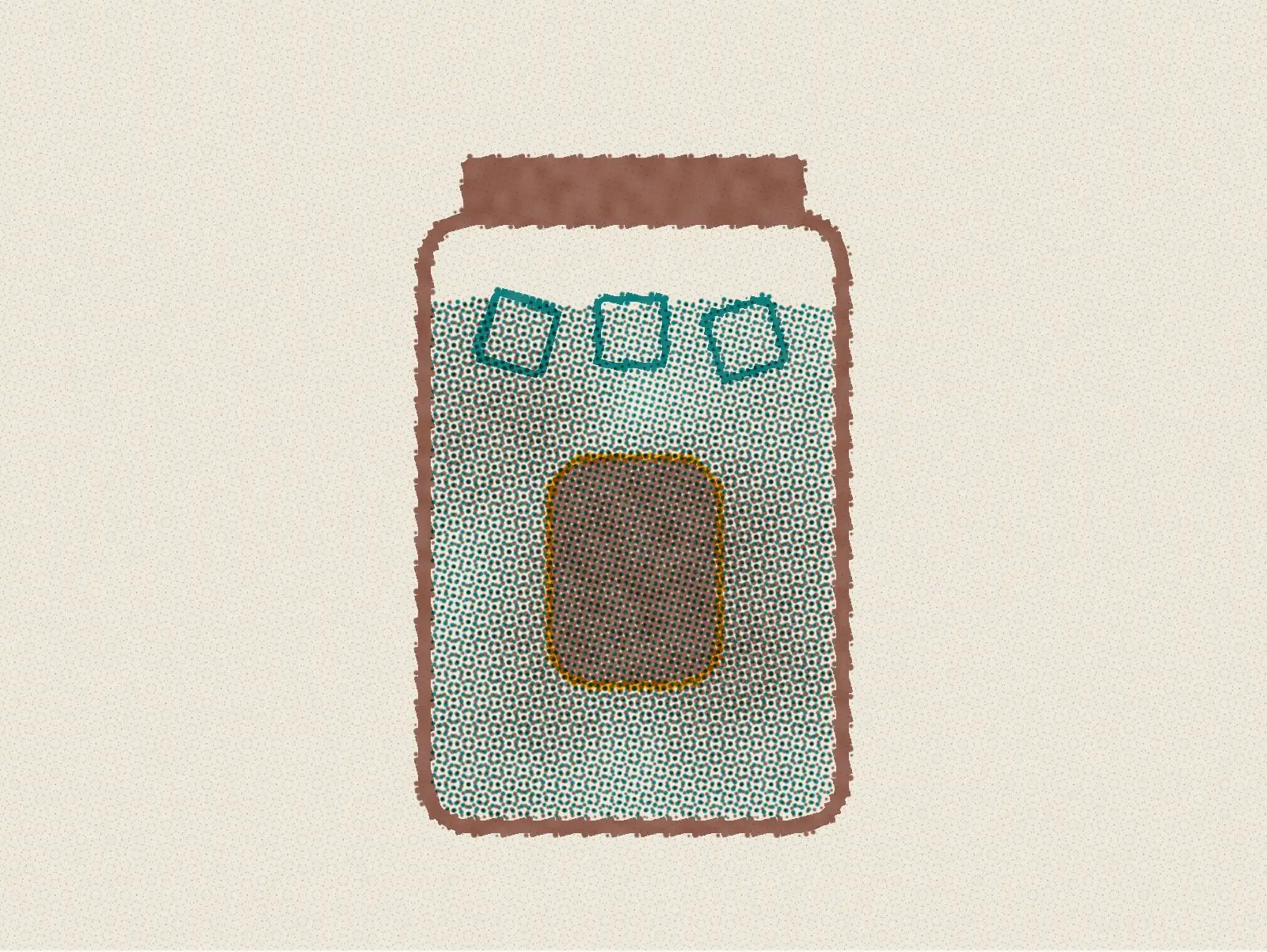
Cold Brew — extracting with time instead of heat
Grounds steeped in water for half a day to a full day. Without heat, bitterness and acidity come out gently, for a mellow cup.
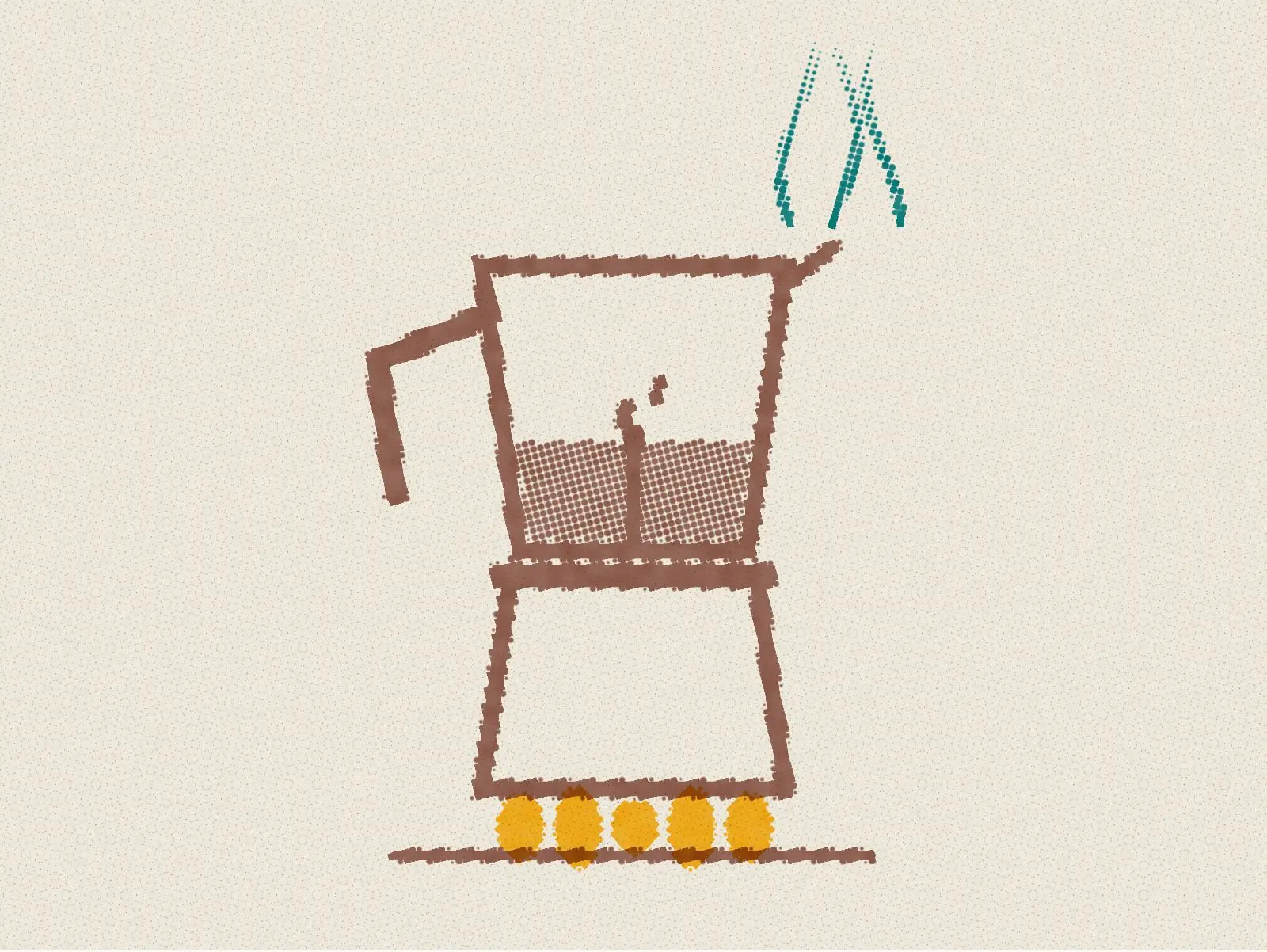
Moka Pot — on the flame, pushed up by steam
A stovetop brewer born in Italy in 1933. Steam pressure pushes the water in the lower chamber up through the coffee for a strong brew.
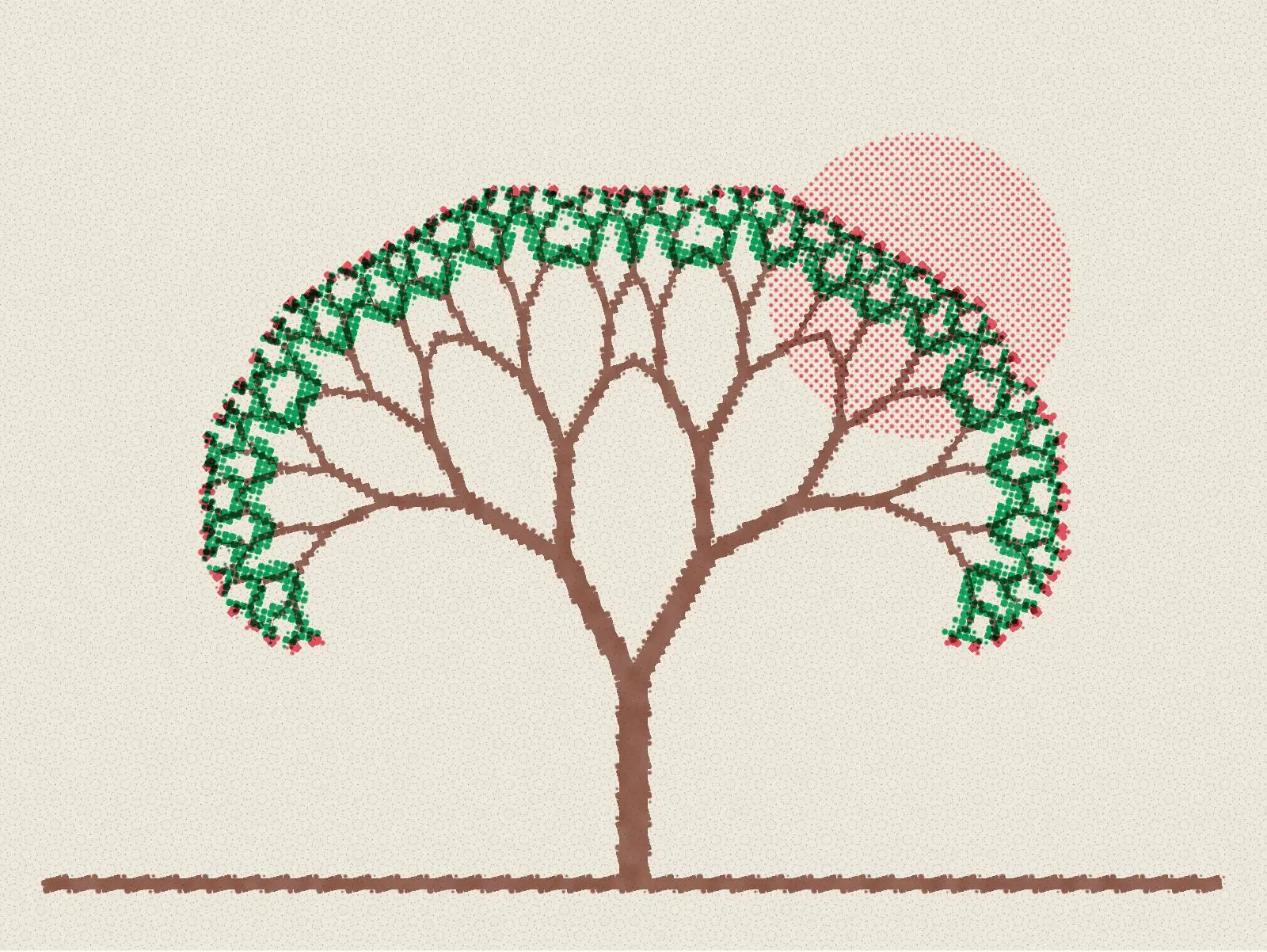
Reading the family tree of varieties — from Typica to Starmaya in one diagram
Most of the hundreds of Arabica varieties branched from a very small number of ancestors. Here are the varieties covered in the Journal, in a single family tree.
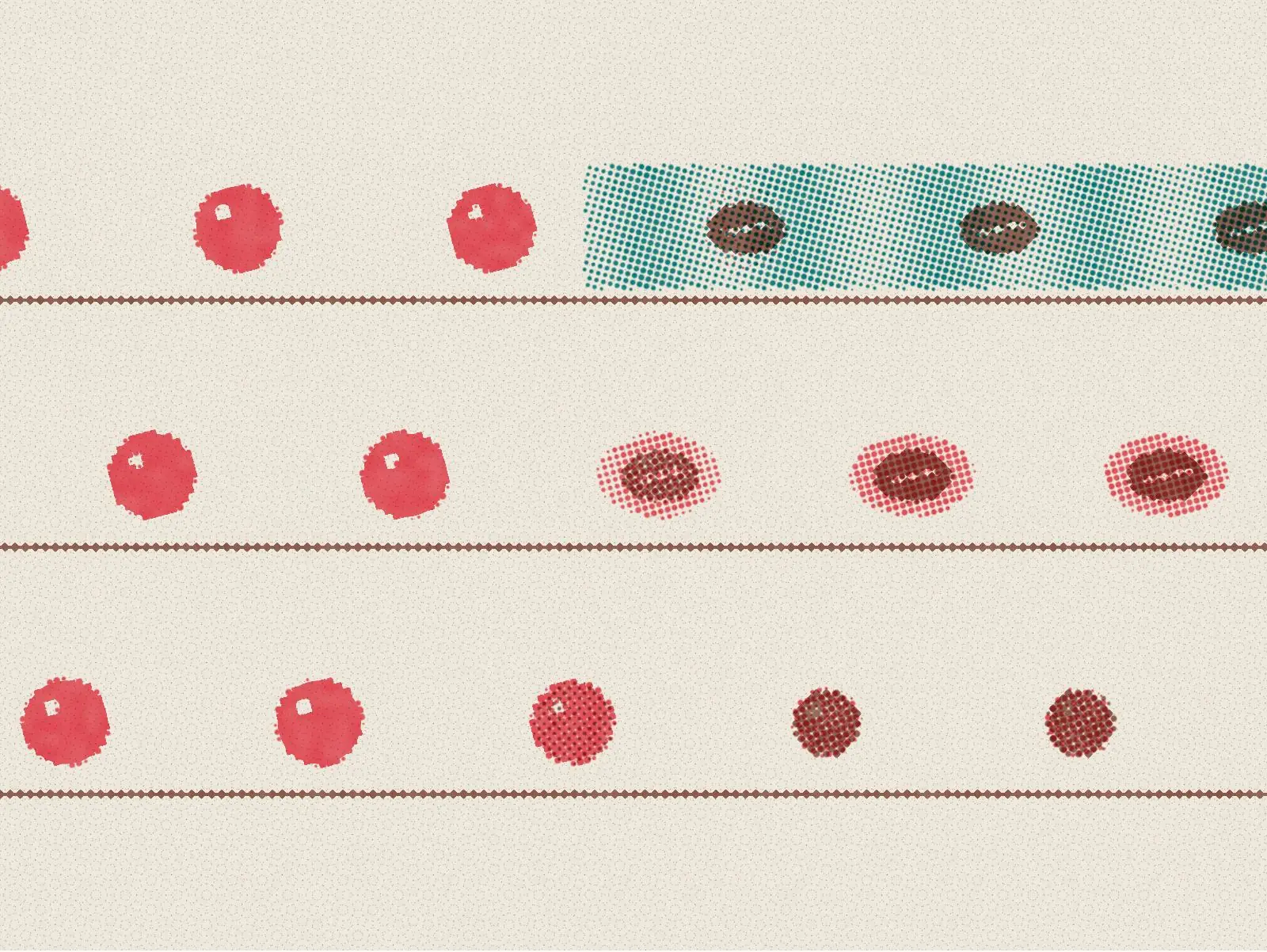
Comparing processes — reading the steps and flavor tendencies in diagrams
From Washed, Natural and Honey to Anaerobic and Carbonic Maceration. The differences in steps and flavor tendencies, laid side by side in diagrams.
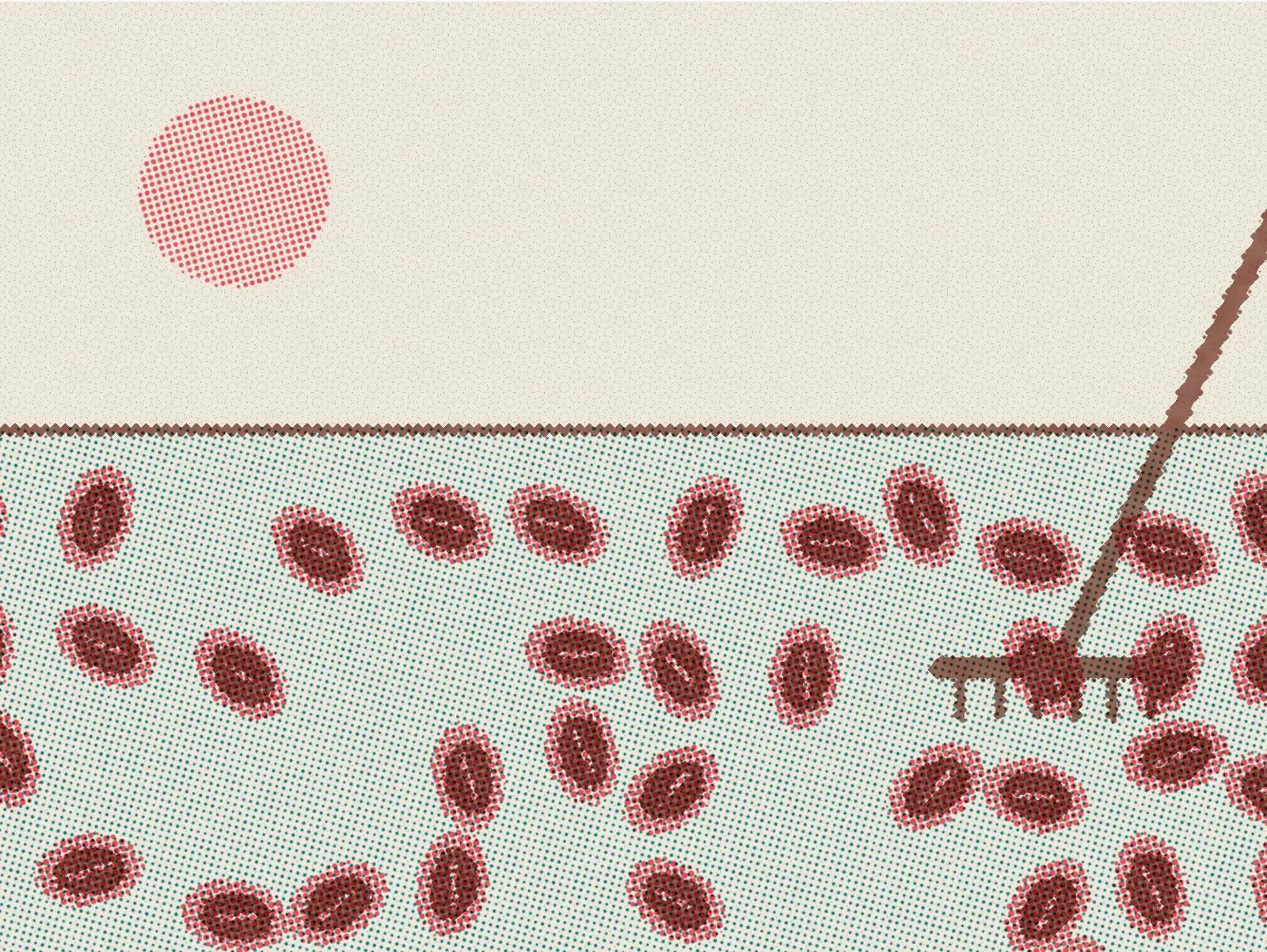
Pulped Natural — Brazil's way of drying with the mucilage on
The fruit comes off, the mucilage stays on through drying. The steps closely resemble Honey, but the land it came from and its aims differ.
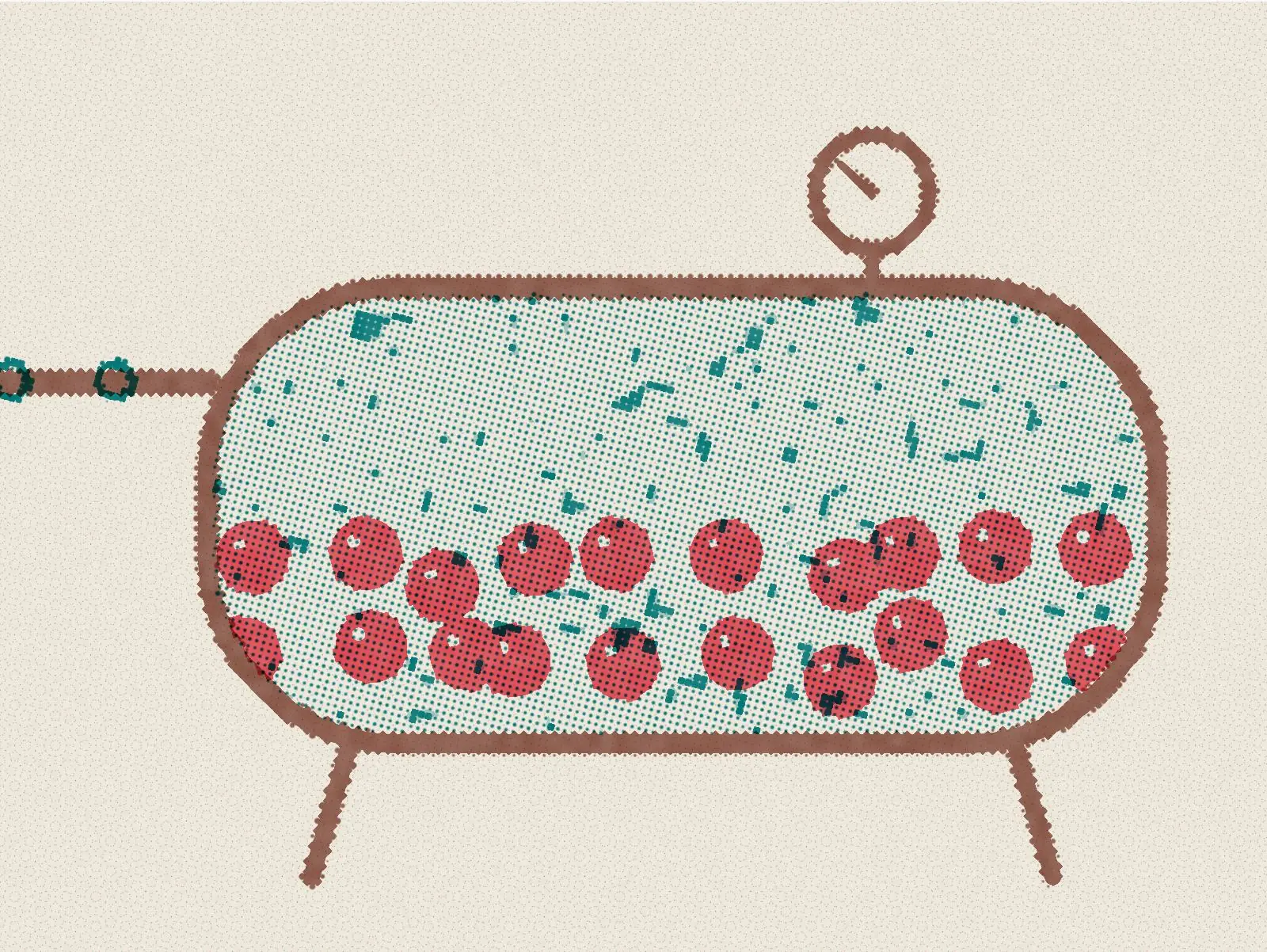
Carbonic Maceration — inside a tank filled with carbon dioxide
A technique borrowed from winemaking: fill the tank with carbon dioxide, then ferment. Sorting out a method easily confused with Anaerobic.
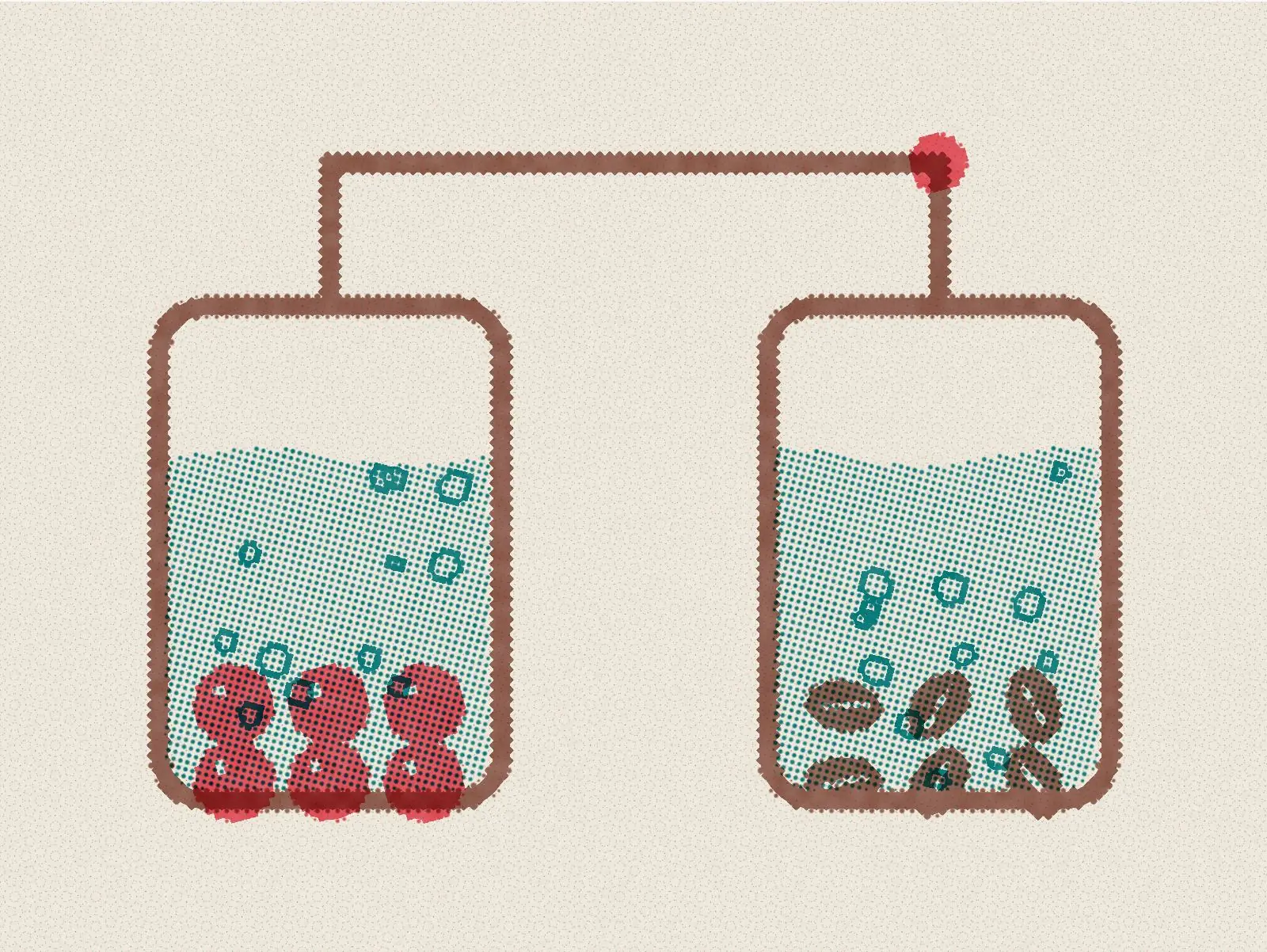
Double Fermentation — designing fermentation in two stages
From the two-stage fermentation handed down in Kenya to today's multi-stage fermentation. Very different steps sit under the same name.
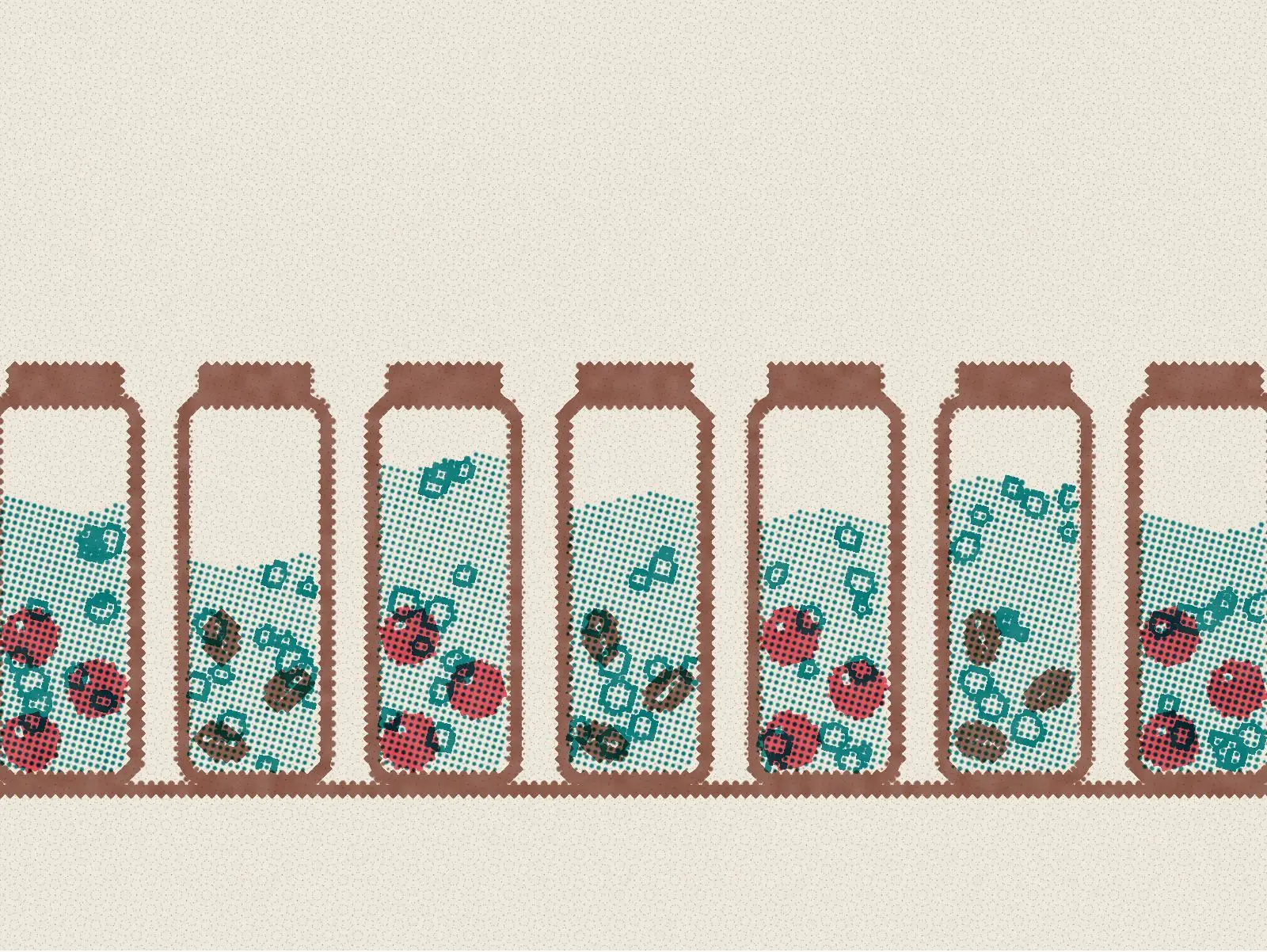
Fermentation and special processes — seven techniques behind the names
The fermentation designs and special steps layered on top of the base processes. One by one, what actually happens behind each name.

Starmaya — the first F1 hybrid that can be grown from seed
F1 hybrids that could only be propagated from cuttings can now be grown from seed. In the highlands of Vietnam, too, growers have begun to try this new variety.
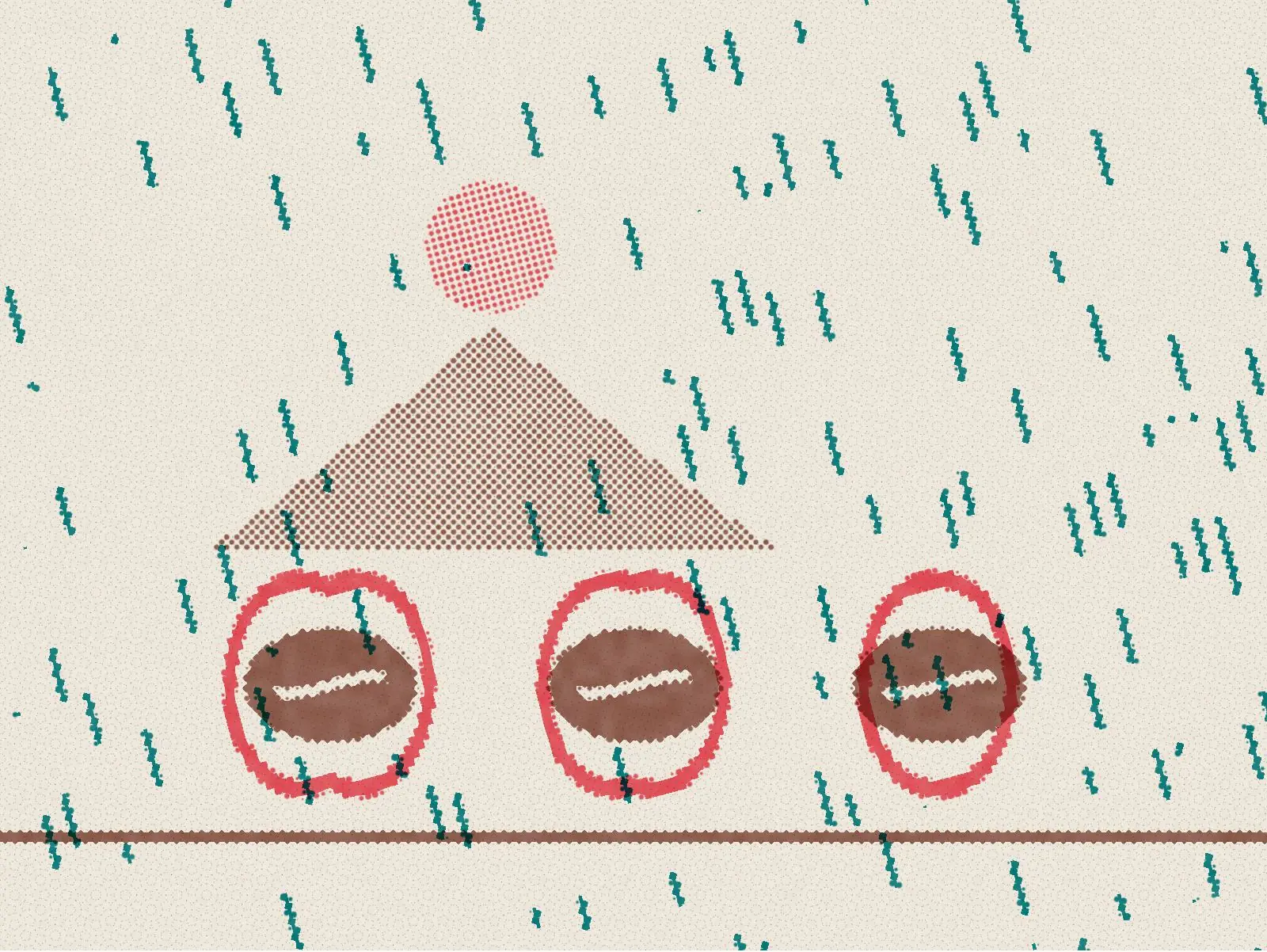
Wet-Hulled (Giling Basah) — the damp hulling found only in Indonesia
The parchment is stripped before the beans are fully dry. This unusual step, born of high humidity, is the source of that earthy character.
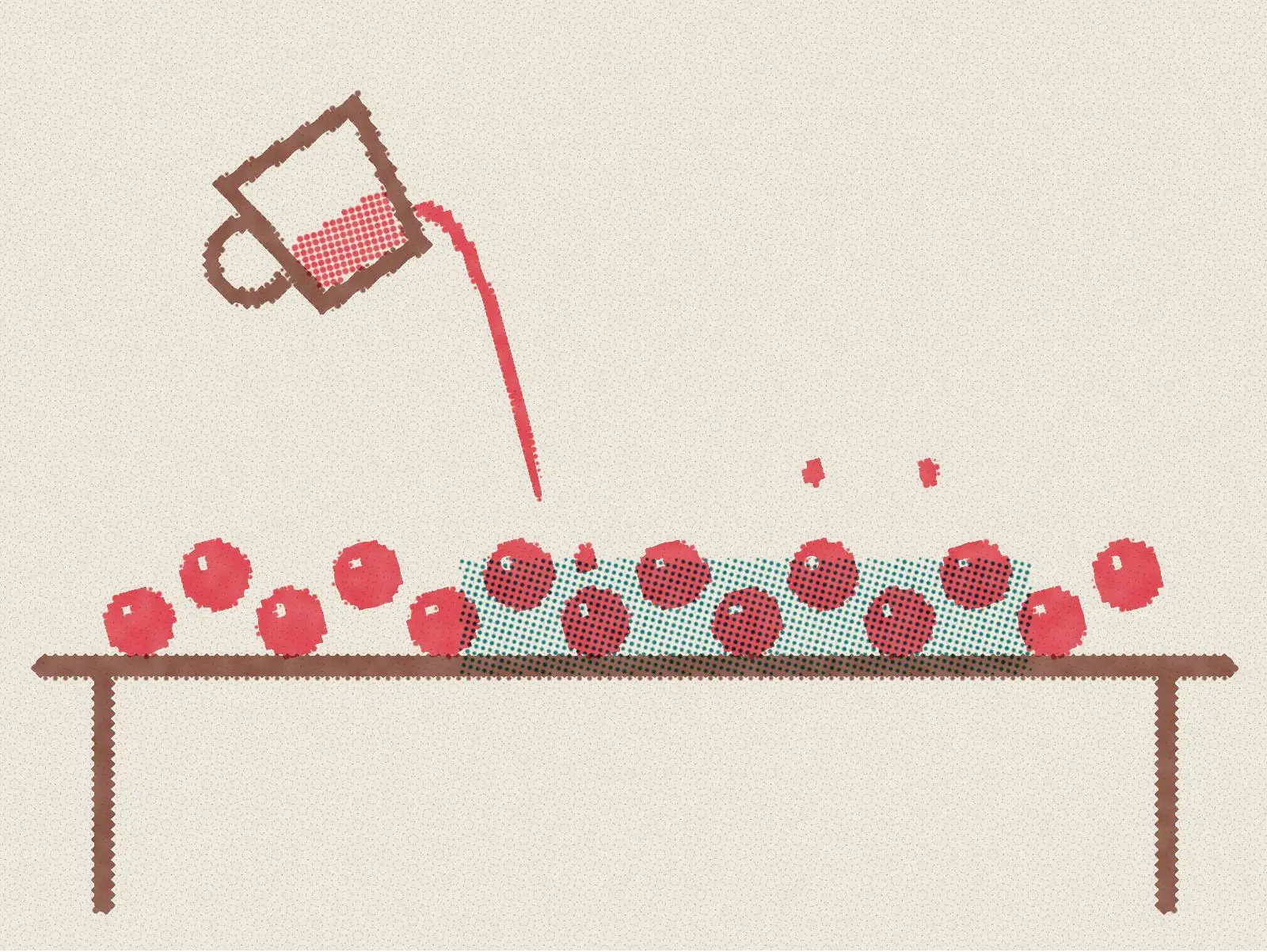
Mosto Natural — the idea of returning the juice
The word "mosto", from winemaking, has been brought into coffee processing. A field that is not yet standardized.
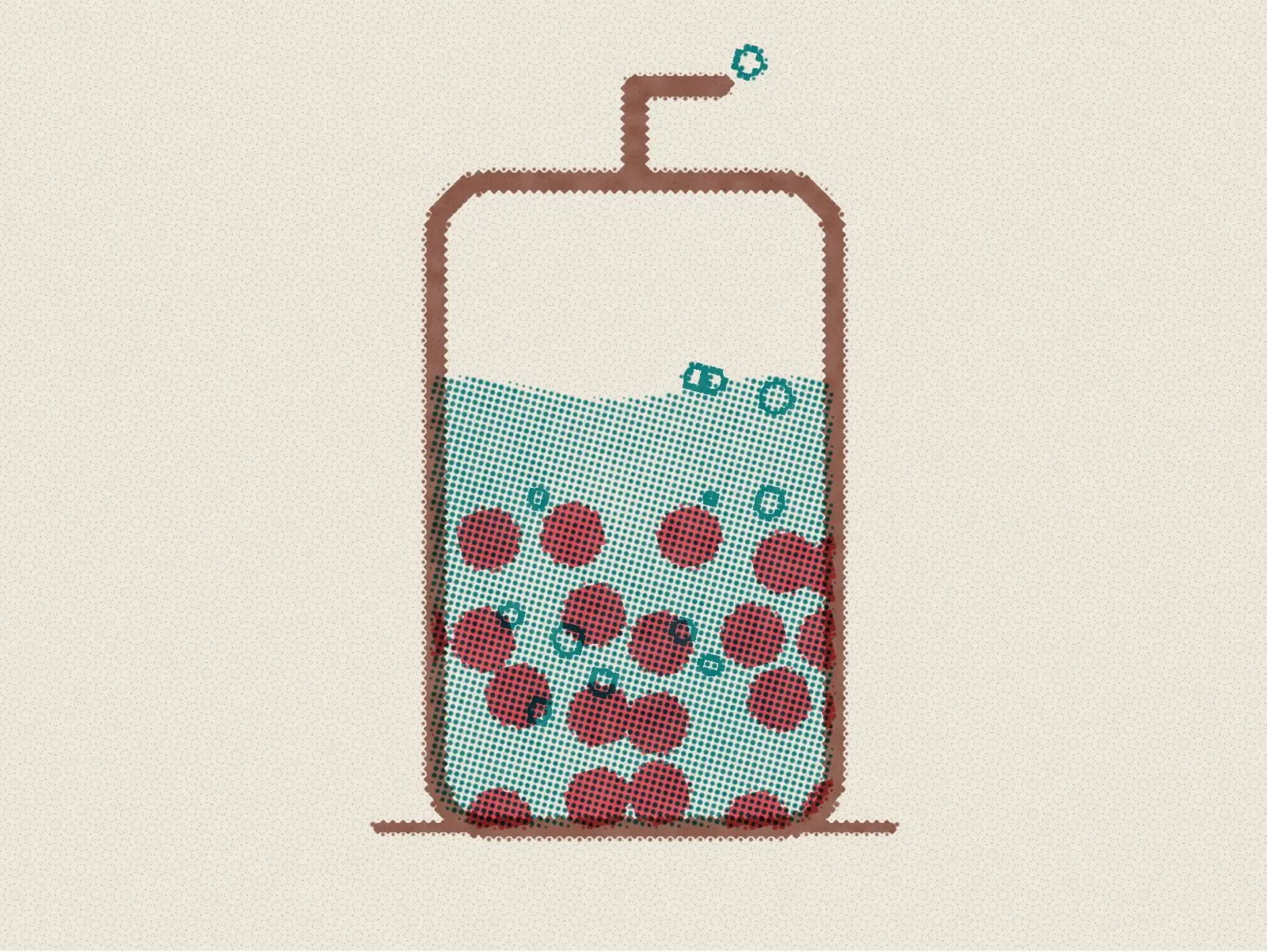
Anaerobic — cutting off oxygen to design fermentation
What happens inside a sealed tank? A relatively new field, where ideas from winemaking were brought into coffee.
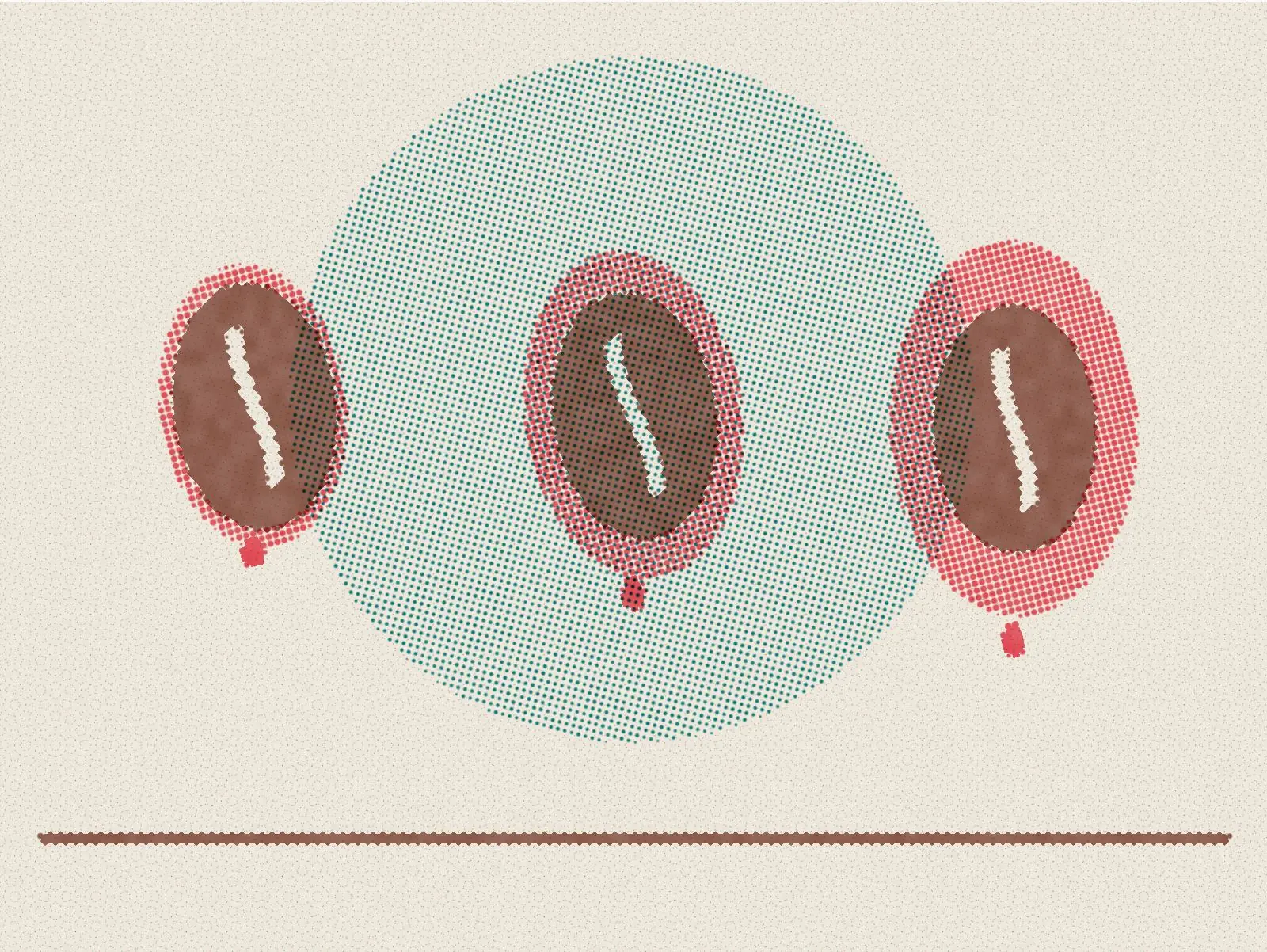
Honey Process — a dial for how much mucilage to leave on
White, Yellow, Red, Black. A method that lets flavor be designed in steps through how much mucilage is left and how fast the coffee dries.
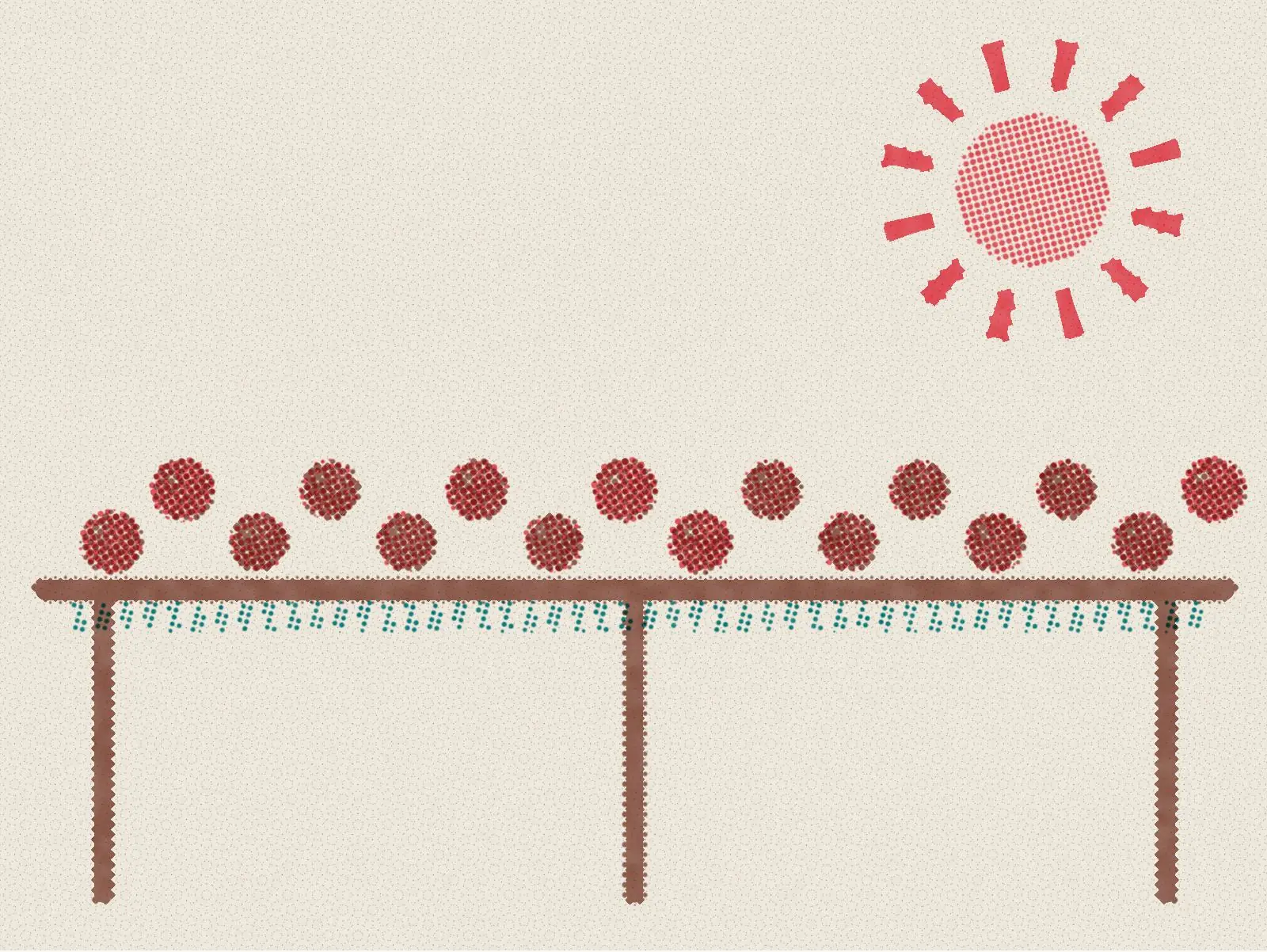
Natural — the oldest method, drying the whole cherry
No water, just sun and time. Done well, it gives dense fruit; done badly, nothing but the smell of fermentation.
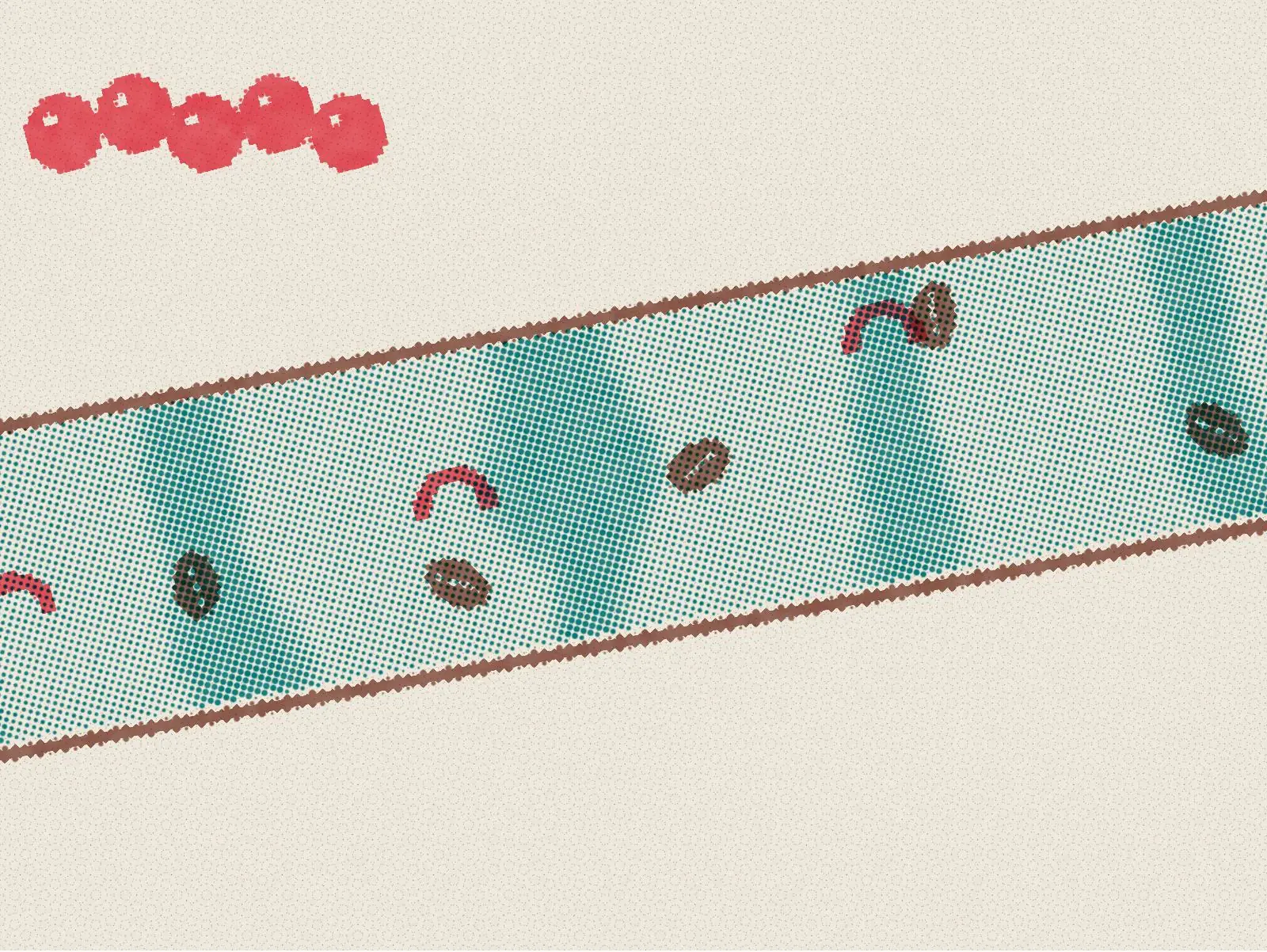
Washed — the true nature of the bean, as it is
Washed in water and dried once the mucilage is gone. The most transparent method, and the one that tests an origin's character.
The big picture of processing — taking the seed out of the fruit, the step that decides flavor
Even cherries from the same tree on the same farm become different drinks when processed differently. Here are the points where they diverge.
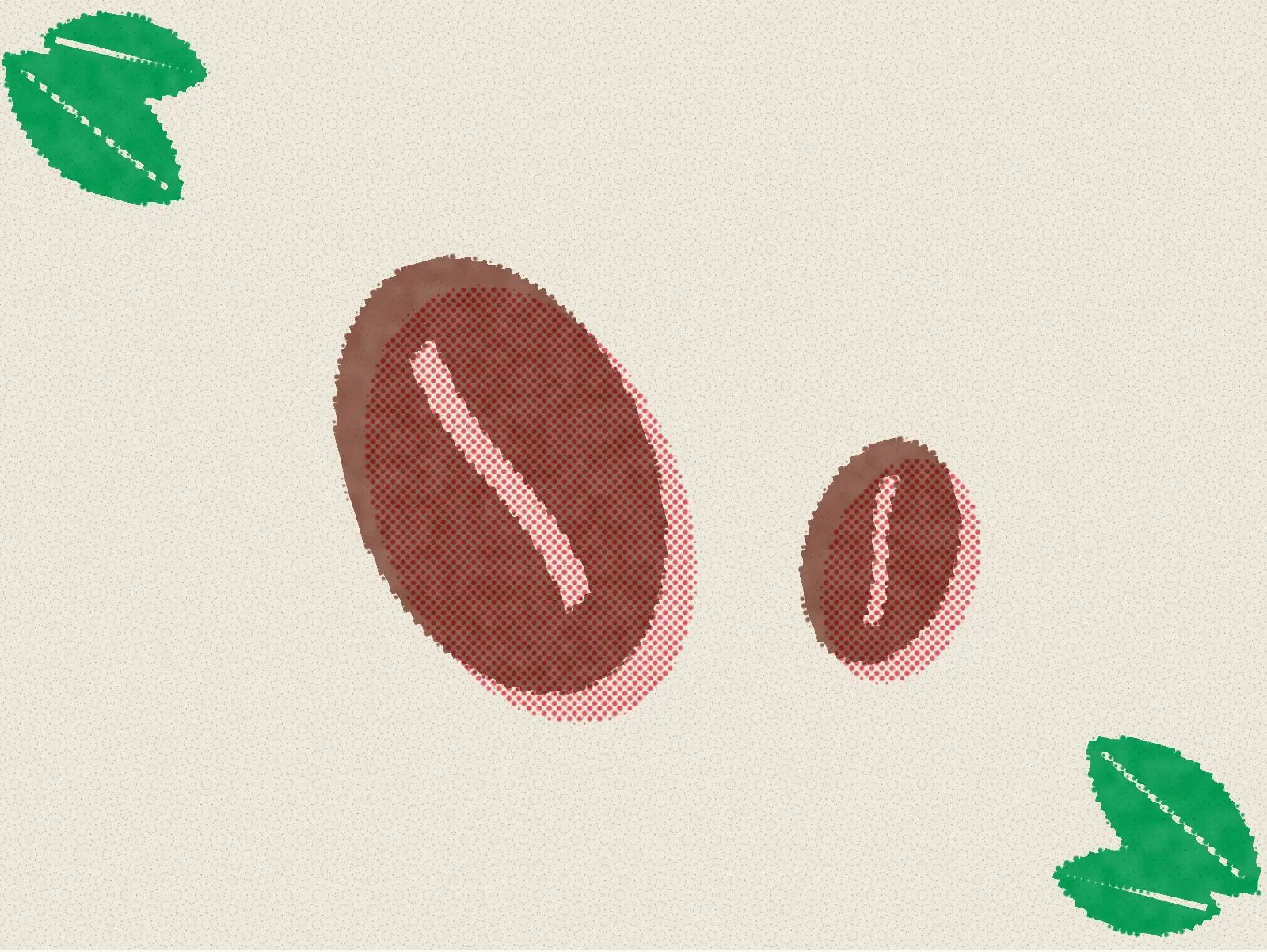
Pacamara — giant beans and an unstable character
A cross of two mutations, bred by hand in El Salvador. It keeps standing out at competitions.
SL28 and SL34 — Kenya's blackcurrant acidity
Selection numbers from the 1930s became the variety names. They are the source of the strong acidity typical of Kenyan coffee.
Catuai — the practical worker whose cherries stay on the branch
Developed over more than twenty years by a Brazilian research institute. Not flashy, but it keeps supporting producers in the field.

Caturra — the short revolution found in a Brazilian field
A chance mutation transformed the density of coffee fields. One of the most widely planted varieties in Latin America.
Geisha — how a forgotten seed rewrote the rules of price
Collected in one region of Ethiopia and planted as a windbreak. In 2004, the world learned what it really was.

Bourbon — the line of sweetness, named after an island
Seedlings carried to a small island in the Indian Ocean became the source of Latin America's sweet coffees. The other ancestor, alongside Typica.
Typica — the low-yielding aristocrat at the start of everything
From Yemen to Java, Amsterdam and then the Caribbean. Much of the world's cultivated Arabica traces back to this one line.
Liberica and Excelsa — the third option, under one percent of the world's coffee
Huge trees and huge cherries. Quietly kept alive in the Philippines and Vietnam, this species is being reconsidered against the backdrop of climate change.
Canephora (Robusta) — a species named for strength, still being reassessed
Born in the Congo Basin, it saved the world after leaf rust. It is also what made Vietnam the world's second-largest producer.
Arabica — the delicate lead that makes up sixty percent of the world's coffee
Born in the Ethiopian highlands, it reached the world by way of Yemen. A species that carries every weakness in exchange for its aroma.
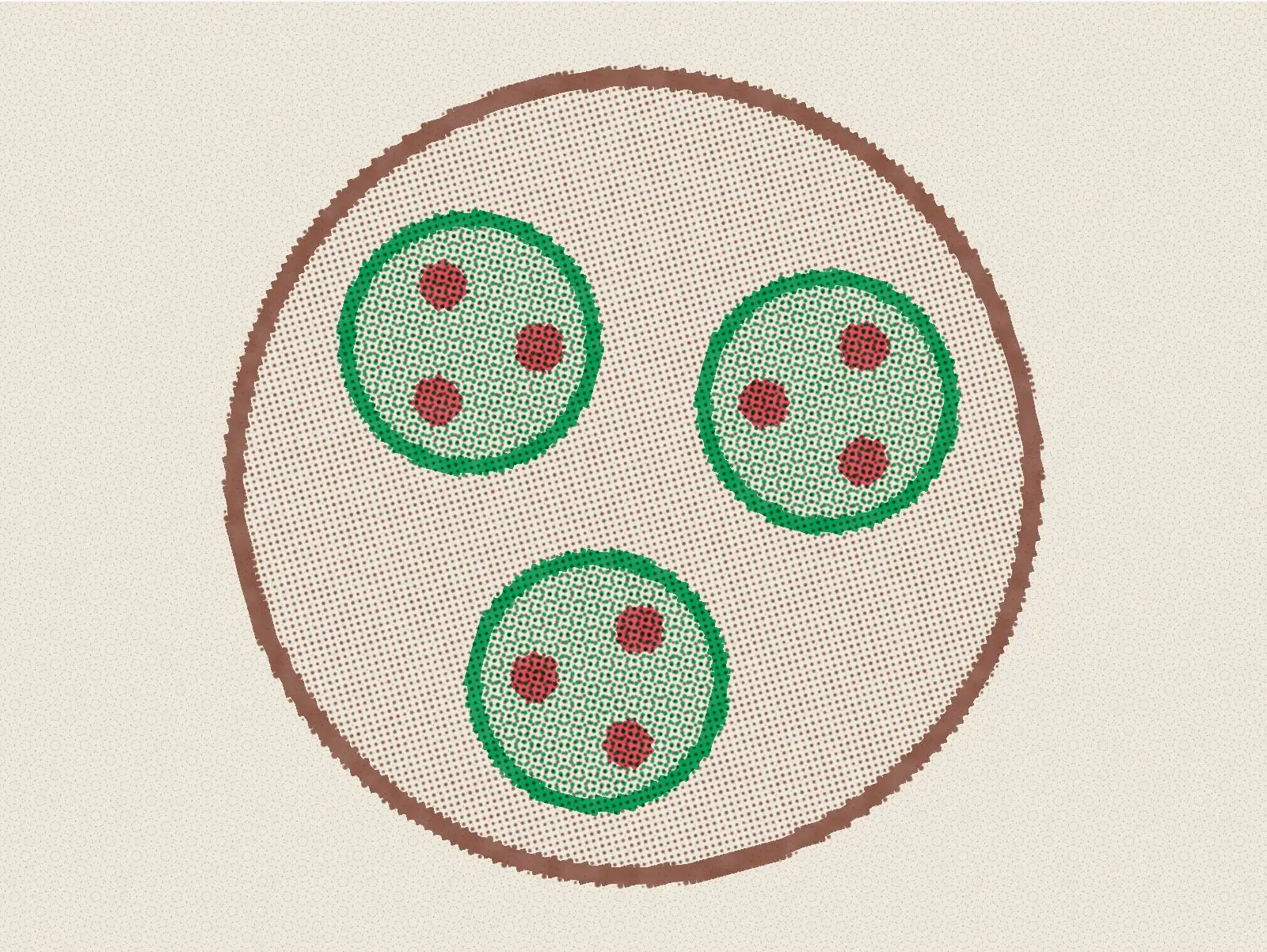
How coffee is classified — think in three levels: species, variety, origin
Arabica and Robusta, Geisha and Typica. These words are easily confused, but they actually belong to different levels.

Brewing with a Phin — the basics of Vietnamese coffee
How to brew Vietnamese-style drip coffee with a single small metal filter.