Arabica — the delicate lead that makes up sixty percent of the world's coffee
2026-07-02
Most of what is called specialty coffee is Arabica (Coffea arabica). It accounts for about sixty percent of world production and outclasses the other species in the complexity of its aroma and the quality of its acidity. But that appeal comes at the price of every kind of difficulty in cultivation.
From the forests of southwestern Ethiopia
Its origin is thought to be the highland forests of southwestern Ethiopia. Place names such as Kaffa, Gesha and Yirgacheffe still appear on shop shelves around the world as origin names. Wild Arabica still grows in the forests of this region and is protected as a treasury of genetic diversity.
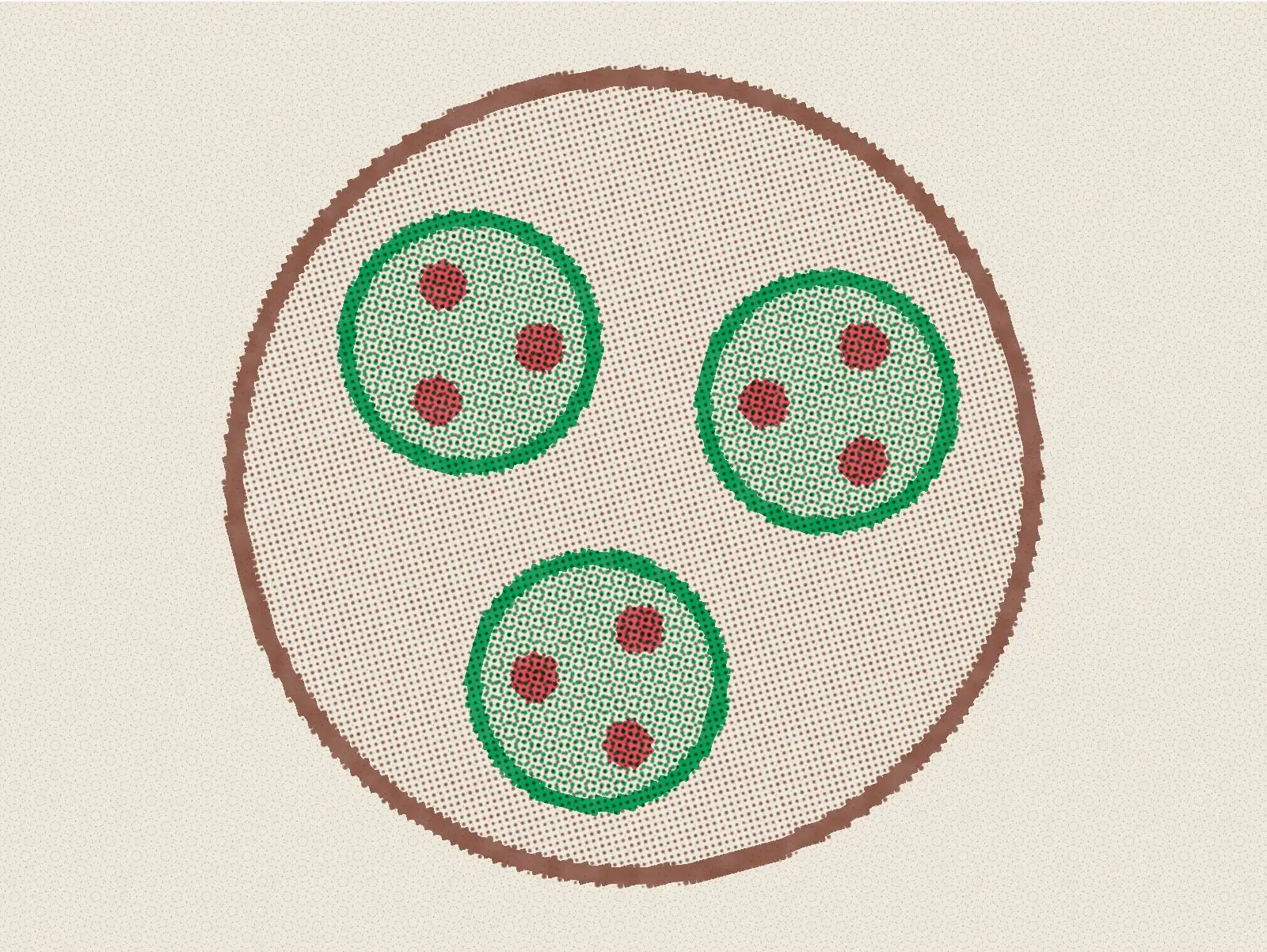
Botanically, Arabica is an unusual species. It is a tetraploid born from a natural cross between Canephora and Eugenioides (Coffea eugenioides), and has forty-four chromosomes. While most other coffee species are diploids with twenty-two, Arabica alone carries twice the genetic information. This origin is thought to be the foundation for its complex aromatic compounds.
Compare
The three species side by side
Chromosomes
44tetraploid
- Pollination
- Self-pollinating
- Altitude
- Cool highlands above 1,000 m
- Caffeine
- About 1.2%
- Production
- About 60%
Chromosomes
22diploid
- Pollination
- Cross-pollinating
- Altitude
- Lowlands, about 0–800 m
- Caffeine
- About 2.2–2.7%
- Production
- Just under 40%
Chromosomes
22diploid
- Pollination
- —
- Altitude
- Lowlands
- Caffeine
- —
- Production
- Under 1%
From Yemen to the world
Arabica as a cultivated crop first took off in Yemen, on the Arabian Peninsula. The name "Mocha" comes from the port of Mocha, where it was shipped. At the end of the seventeenth century the Dutch took seedlings from Yemen to Java; some of them went to the botanical garden in Amsterdam, and then by way of Paris to the Caribbean island of Martinique in 1723. Much of the coffee that spread through Central and South America descends from this very small number of seedlings.
Meanwhile, the line the French carried from Yemen to Bourbon Island (today's Réunion) in the early eighteenth century became another great stream, later called Bourbon. Typica and Bourbon: many of today's major varieties branch from these two ancestral lines.
Route
The two routes Arabica took to the world
- Southwestern EthiopiaOriginHighland forests where wild Arabica still grows
- Yemen (port of Mocha)Cultivation beginsShipped from the port of Mocha
- JavaLate 17th c.The Dutch take seedlings from Yemen
- Amsterdam1706Sent to the botanical garden
- Paris1714Presented to Louis XIV, then to the royal botanical garden
- Martinique1723Gabriel de Clieu carries a seedling. The source of Latin America's Typica
- Bourbon Island (now Réunion)Early 18th c.The French carry it from Yemen. The origin of the name Bourbon
- African continentFrom the mid-19th c.Spread by missionaries and settlers to Africa and Latin America
Delicacy as a weakness
Because Arabica self-pollinates, its genetic diversity is extremely narrow. The genetic range of the Arabica grown around the world is only a small slice of the wild populations in Ethiopia. This uniformity translates directly into vulnerability to disease.
Pollination
How a plant is pollinated sets its genetic range
Arabicaself-pollinating
It can set fruit with its own pollen. Its genetic range is narrower as a result, and disease spreads easily.
Canephoracross-pollinating
It cannot be fertilized by its own pollen and needs pollen from another plant. Genetic diversity is kept, which makes it resilient.
Coffee leaf rust (Hemileia vastatrix) destroyed Ceylon's coffee industry in the late nineteenth century and turned the island into a land of tea. Even today it breaks out in periodic epidemics in Central and South America. Arabica also fails to set fruit when it is too hot and needs cool conditions above about a thousand meters, which is a serious risk under climate change.
The outline of its flavor
Its caffeine content is about 1.2 percent, roughly half that of Robusta. In exchange it holds more lipids and sugars, which produce aromas reminiscent of flowers and fruit and a bright quality of acidity. The higher the altitude, the more slowly the cherries ripen and the more sugar builds up, so high-grown Arabica has deeper layers of acidity and sweetness.
The Arabica we carry from Cầu Đất in Lâm Đồng province grows at 1,400 meters. Vietnam has a strong image as a Robusta country, but in parts of the northwest and the Central Highlands there really are places well suited to Arabica like this one.