Wet-Hulled (Giling Basah) — the damp hulling found only in Indonesia
2026-07-18
If you have drunk a Sumatran Mandheling, you may have noticed flavors of earth, wood and herbs not found in other origins. Most of that distinctiveness comes not from the variety or the altitude, but from the processing method.
The Giling Basah process
In Indonesian it is called Giling Basah; in English, Wet-Hulled or Semi-Washed. The steps go like this.
The fruit is removed from the harvested cherries, the beans are fermented briefly to loosen the mucilage, and then washed. Up to this point it is not very different from Washed.
The difference comes next. Normally the parchment is removed after drying to a moisture content of eleven to twelve percent, but in Giling Basah the beans are hulled while still quite wet, at around thirty to thirty-five percent moisture. The exposed beans are then dried further to finish.
Cross-section
What the bean is wearing when it starts to dry
- skinremoved
- pulpremoved
- mucilageremoved
- parchmentkept
- silver skinkept
- seedkept
Drying starts close to Washed, and the parchment comes off while 30–35% moisture still remains. The exposed bean then finishes drying.(Earlier: before the parchment comes off)
Moisture when the parchment comes off
30–35%
Flow
In order of the steps (top to bottom)
Where sealed fermentation goes in: Anaerobic, Carbonic Maceration and others (sometimes after the fruit is removed)
Why do it this way?
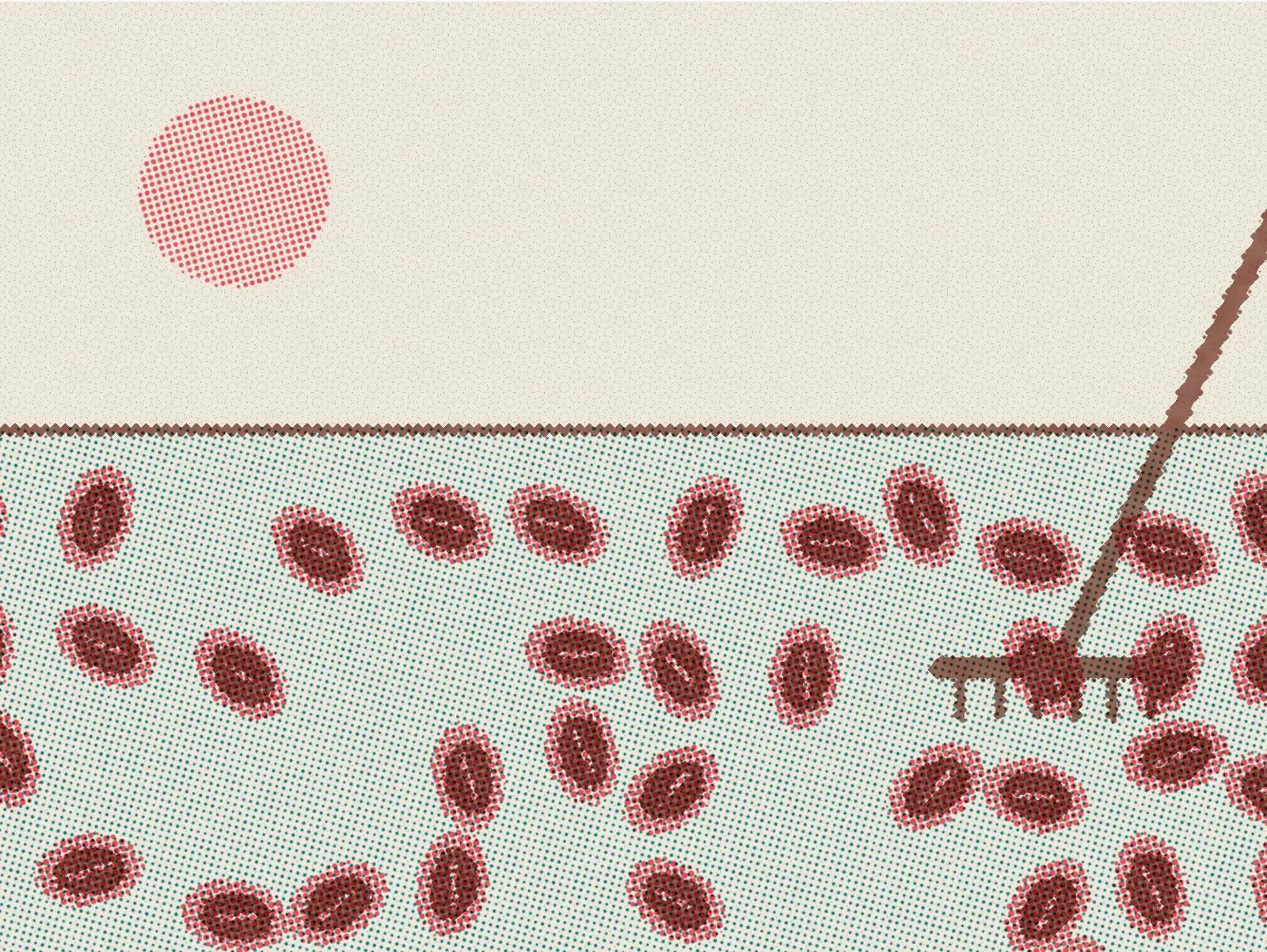
The reason is the climate. Indonesian origins, starting with northern Sumatra, have a lot of rain and high humidity all year round. With the usual method drying takes too long, and the risk of mold and over-fermentation rises in the meantime.
Strip the parchment early and the beans touch the air directly and dry faster. The economic factor that producers can shorten the time until they get paid also lies behind why this method took hold. In other words, it is less a process designed for quality than a practical answer to the conditions of that land.
Effects on flavor and appearance
Beans hulled while damp turn a deep, bluish green. They are so distinctive you can tell they are Indonesian from the look of the green coffee alone.
The cup has subdued acidity and a very heavy mouthfeel, with flavors reminiscent of soil, fern, cedar and spice. The word "earthy" is often used. This character clearly divides opinion, and under evaluation criteria that prize cleanness it is sometimes treated as a defect.
Southeast Asian humidity as a shared condition
Vietnam is also a hot, humid country. Strong sun can be expected in the dry season of the Central Highlands, but depending on the region and time of year, drying conditions can be tough. Just as Indonesia found Giling Basah as its answer, each land needs a process that suits its climate.
Ranking processes as "correct methods" and "inferior methods" is not a very meaningful way to look at them. Every process exists as an answer to the constraints of its land. Giling Basah is the clearest example. Comparing processes sets out the differences between each process in diagrams.