Honey Process — a dial for how much mucilage to leave on
2026-07-15
The name Honey Process does not mean honey is used. It comes from the way the bean's surface becomes sticky and looks as if coated in honey when it is dried with the mucilage left on. Its steps closely resemble Pulped Natural, developed in Brazil, and the two are often treated as the same thing.
Between Washed and Natural
The steps are the same as Washed up to a point. A pulper removes the fruit. But instead of going into a fermentation tank, the beans move on to drying with the mucilage still on.
It therefore sits between Natural's "dry it with the fruit on" and Washed's "remove the mucilage, then dry". It takes in some of the fruit's sweetness without taking on as much fermentation risk as Natural. As a design philosophy it is a compromise, but this compromise proved very effective.
Cross-section
What the bean is wearing when it starts to dry
- skinremoved
- pulpremoved
- mucilagekept
- parchmentkept
- silver skinkept
- seedkept
Only the skin and fruit are removed by machine; the bean dries wearing its mucilage. How much mucilage is left changes the result.
Moisture when the parchment comes off
11–12%
White, Yellow, Red, Black
Honey has grades named by color. There is no strict international standard, but they are generally understood as follows.
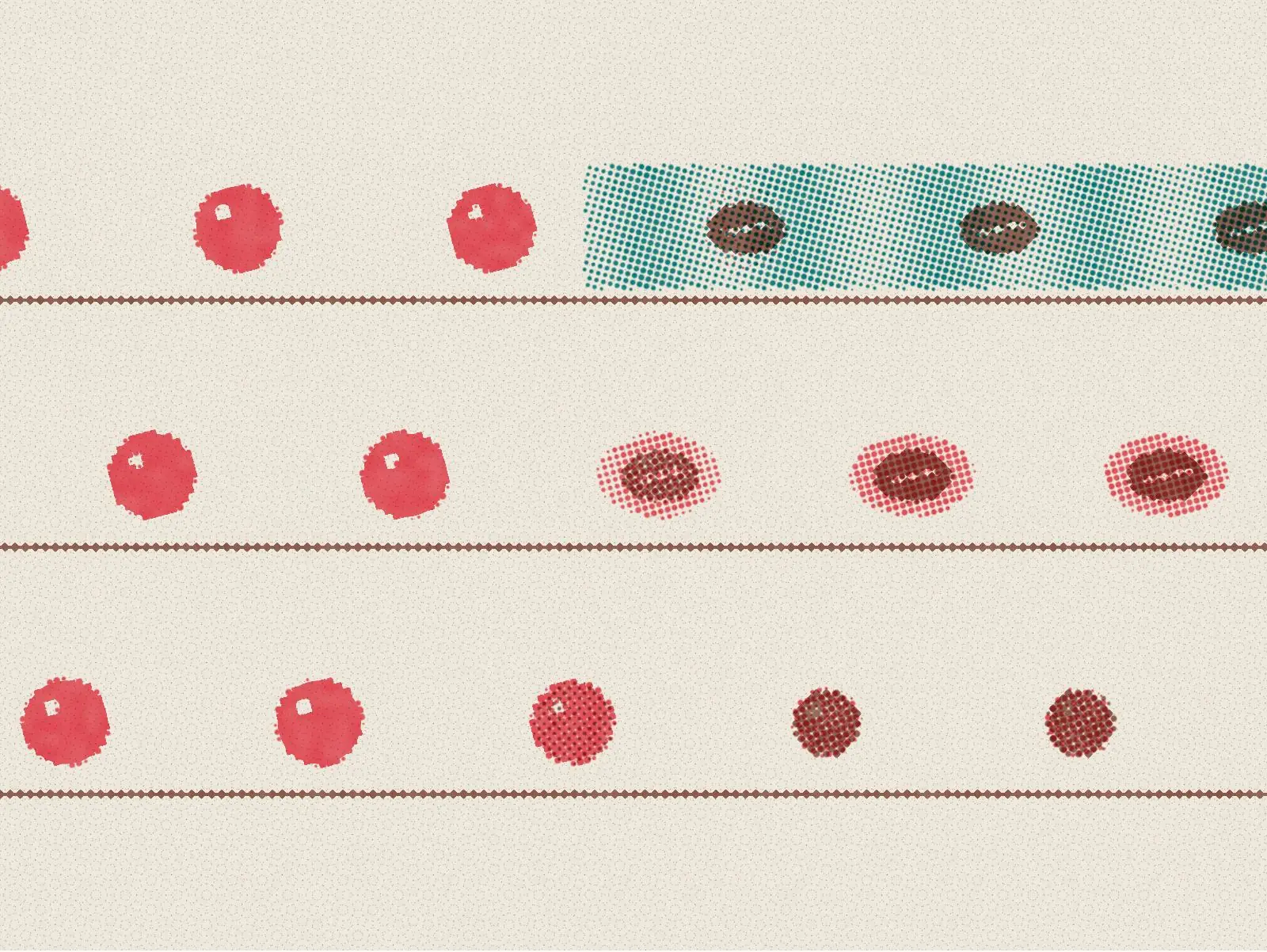
White Honey has almost all of the mucilage removed and is dried quickly, giving a clean finish close to Washed. Yellow Honey leaves about half the mucilage and dries relatively quickly in the sun.
Red Honey leaves much of the mucilage and dries slowly, using shade. Black Honey leaves almost all of it and dries the longest, under cover. The darker the color, the more fruit and sweetness, and the harder it is to manage.
The definitions of the colors, however, differ by producer, depending on drying method, sun exposure and how the mucilage is left. You cannot pin down a taste from the color name alone.
Honey colors
White, Yellow, Red, Black — how much is left, and how it dries
White
Almost all removed
Dried quickly
Yellow
About half left
Fairly fast, in the sun
Red
Much left
Slowly, in shade
Black
Almost all left
Longest, under cover
Increases to the right
Spread by Costa Rica
It was Costa Rican producers who systematized this technique and spread it to the world. In the 2000s, in response to low coffee prices, a movement spread among small producers to run their own small processing mills (micro mills) and set themselves apart. The Honey Process became one of their main tools.
It is also valued from an environmental point of view because it uses less water.
Its value as a dial
The essence of the Honey Process is that producers can "design" the flavor. From the same beans, several different lots can be made just by changing how much mucilage is left and how fast it dries.
With Robusta too, Honey is sometimes chosen as a way to draw out sweetness like cacao or brown sugar. Washed tends to bring out hardness, while Natural can bring out too much fermentation. The idea is to choose it as a landing point between the two.