Carbonic Maceration — inside a tank filled with carbon dioxide
2026-10-20
Carbonic Maceration is a technique borrowed from winemaking. It is best known from making young wine in France's Beaujolais region, where whole bunches of grapes are fermented in a vessel filled with carbon dioxide. Fermentation begins inside the fruit, and the method is said to produce vivid fruit aromas.
In coffee it began to be tried in the mid-2010s, and together with Anaerobic it became a leading example of designed fermentation.
What it involves
Sorted, fully ripe cherries are placed, fruit and all, in a sealed tank, usually stainless steel. Carbon dioxide is injected to drive out the oxygen in the tank, and then it is sealed. Fermentation proceeds in this state.
Fermentation time varies widely by producer, from several dozen hours to a few days. Many keep the temperature low and let it progress slowly. After coming out of the tank, the coffee either dries as whole cherries (the same flow as Natural) or is pulped and washed (the same flow as Washed).
How it differs from Anaerobic
Both ferment in an environment with little oxygen. The difference is whether you wait for that environment or create it.
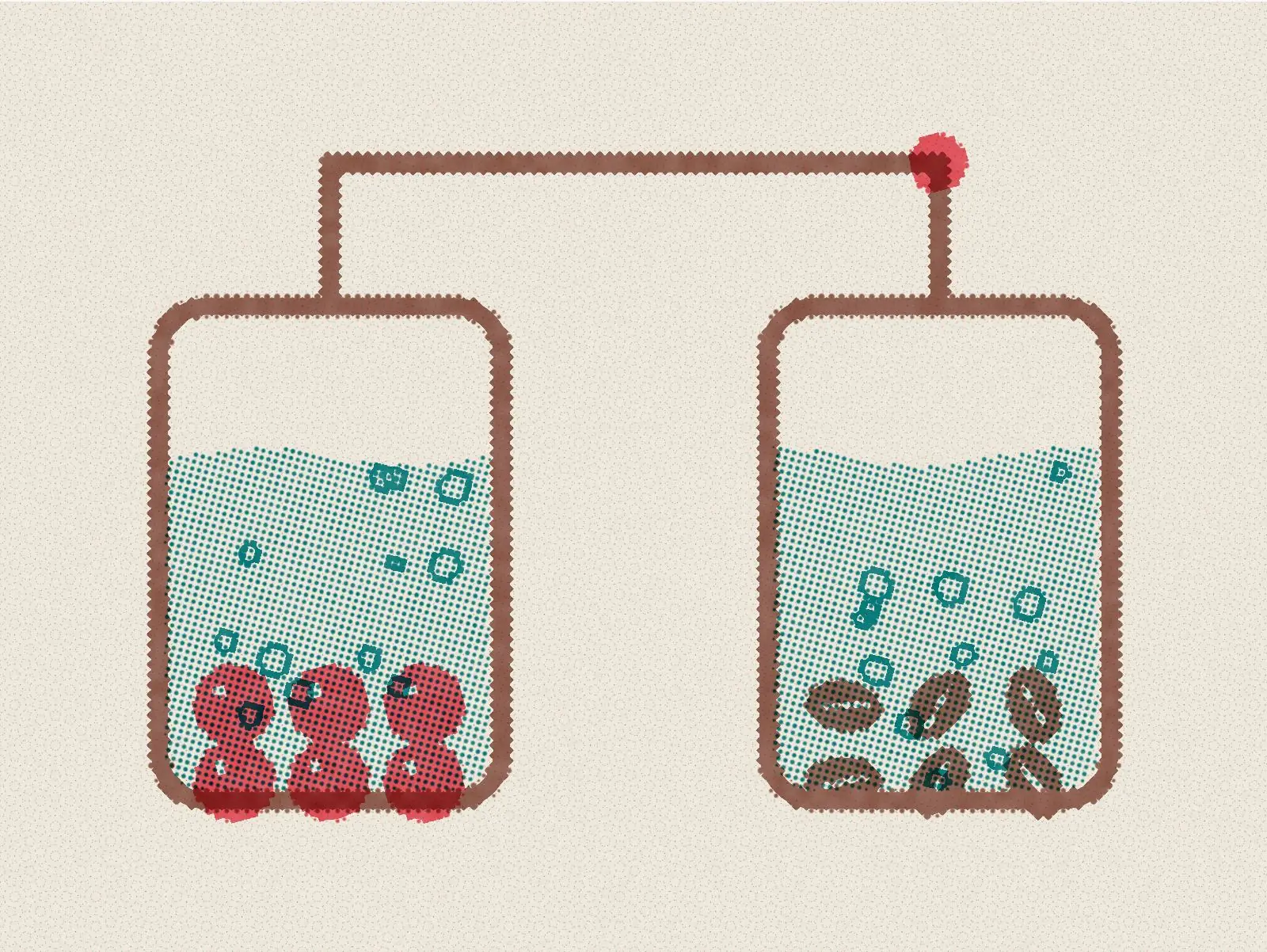
In typical Anaerobic, once the tank is sealed, the carbon dioxide produced by fermentation gradually pushes the oxygen out. Early in fermentation, there is a period when oxygen still remains. In Carbonic Maceration, carbon dioxide is injected first, creating an oxygen-free environment before fermentation begins. It is a method that controls the gas environment more actively.
In practice, though, the names are not used strictly. Some call any lot fermented in a sealed tank Carbonic Maceration, so you cannot judge the steps from the name alone. Whether carbon dioxide was injected is a point that needs checking.
Inside the tank
Waiting for an oxygen-free state, or creating one
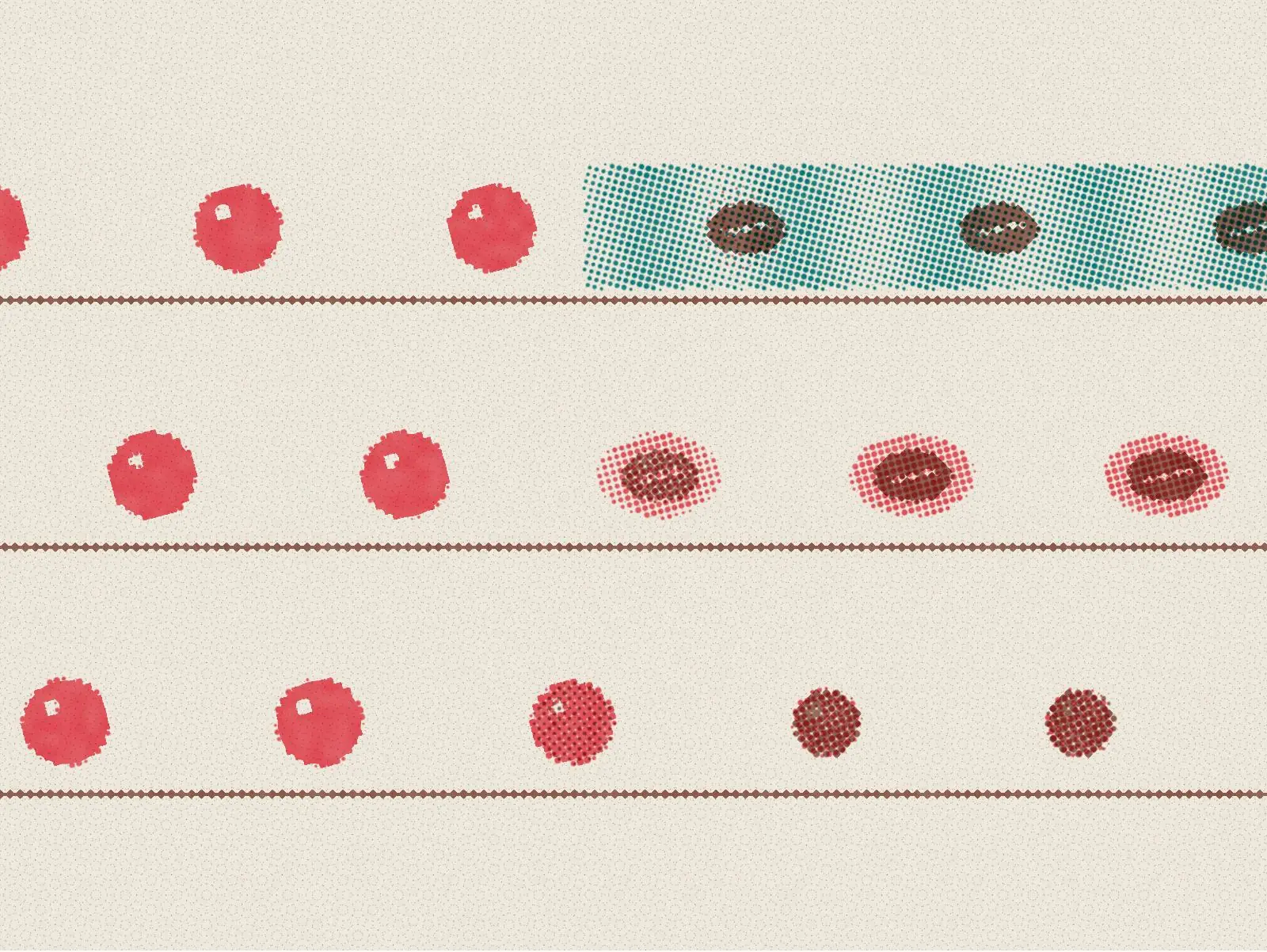
- 1. Just sealed
- 2. Early fermentation
- 3. Later fermentation
Anaerobic
Wait for the oxygen to leave
Air (oxygen) still remains in the space at the top of the tank.
Carbonic Maceration
Drive the oxygen out from the start
Carbon dioxide is injected before sealing, driving the oxygen out.
Is the same thing happening as in wine?
In wine's Carbonic Maceration, it is known that fermentation by the fruit's own enzymes (intracellular fermentation) takes place inside uncrushed grapes. Does the same thing happen inside coffee cherries? That has not yet been fully established.
What is certain is that in an oxygen-free environment the kinds of microorganisms at work change, and so does the makeup of the acids and aromas they produce. The effect in coffee is thought to come largely from that change in microorganisms.
How it caught on
The technique became widely known at the 2015 World Barista Championship. The winning barista from Australia competed with beans processed by Carbonic Maceration, and their vivid aroma drew attention. Since then it has spread, mainly for lots aimed at competitions.
Flavor, and what to watch for
Strong fruit, floral aromas and a distinctive fermented note tend to appear in the cup. It is sometimes compared to red berries, ripe grapes, and at times spices like cinnamon.
On the other hand, the stronger the fermentation aromas, the harder it is to see the character of the origin and variety. Carbon dioxide and equipment add cost, and if management goes wrong it simply becomes a coffee that smells strongly of fermentation. It is a method to judge not by the glamour of its name, but by how its aroma overlaps with what the bean actually is.
Comparing processes sets out the differences between each process in diagrams.