Double Fermentation — designing fermentation in two stages
2026-10-20
Double Fermentation, or Double Washed, is a general name for methods that split fermentation into several stages, or wash the beans once after fermentation and then process them again.
The first thing to understand is that this name only tells you that "there are two fermentations". Whether each takes place in water or in air, whether it is sealed, how many hours it takes: the name alone does not identify the actual steps.
The two stages handed down in Kenya
The source of the name is said to be the method passed down in Kenya's washing stations. Pulped beans are first fermented without water, then washed once the mucilage has loosened. Fermentation then continues again, and the beans are sorted by density as they pass through washing channels. Finally the beans are soaked in clean water and dried on raised beds.
Each stage is said to take roughly half a day to a day, but this varies with temperature, altitude and the customs of the station. Besides Kenya, washing stations in Burundi and Rwanda are also known to combine two-stage fermentation with soaking.
Kenyan process
Kenya's two-stage fermentation
Remove the fruit
Ferment without water
½–1 day
Wash
Loosened mucilage comes off
Ferment again
½–1 day
Wash in channels
Also sorts by density
Soak in clean water
soaking
Dry on raised beds
Why split it in two?
Loosening the mucilage fully in the first fermentation, then washing and following with a second fermentation and soaking, is thought to remove what remains on the surface of the beans more thoroughly. It takes effort, but it is considered one of the factors behind a clean, well-defined cup.
The vivid acidity of Kenyan coffee is often linked to this process. But the SL28 and SL34 varieties and high altitude also have a big influence, and the process alone cannot explain it.
Double Fermentation today
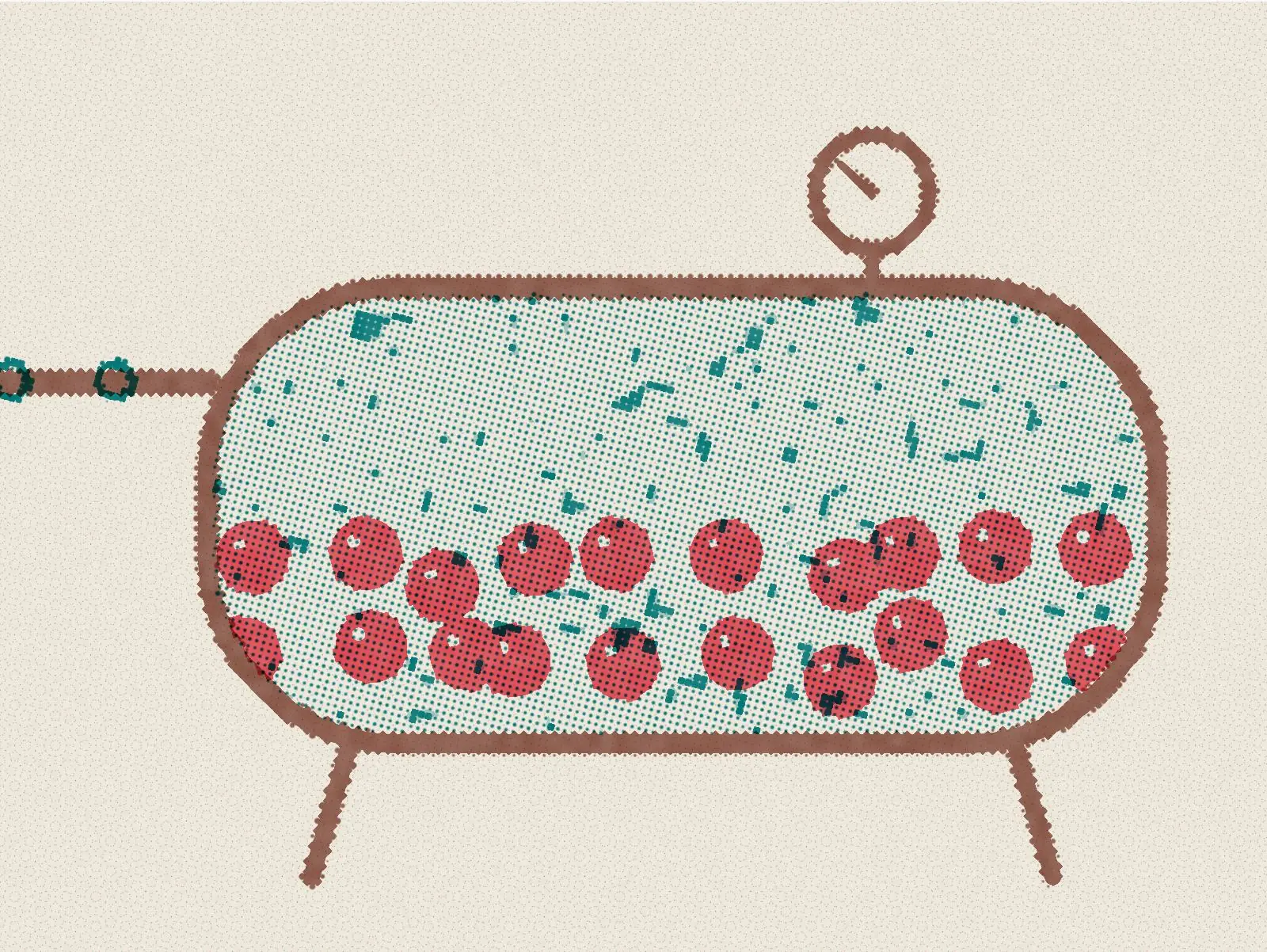
In the specialty world, the same name is also used for entirely different steps. For example, fermenting whole cherries in a sealed tank, then pulping and fermenting a second time. Or adding yeast in the second fermentation. These designs split fermentation into stages to aim for different aromas in each.
Such multi-stage fermentation is often combined with the methods covered in Anaerobic and Fermentation and special processes, and differs from the Kenyan method in both aim and result.
Flavor tendencies
The traditional Kenyan method is said to produce a relatively clean cup with pronounced acidity. With today's multi-stage fermentation, fruit and fermentation aromas may come forward depending on the design, so no single description fits.
What to check
When evaluating beans with this label, you need to check how many stages of fermentation there were, whether each was in water or in air, whether it was sealed, and how many hours and at what temperature. What decides the cup is not the fact of "fermenting twice", but what was done in those two fermentations.
Comparing processes sets out the differences between each process in diagrams.