Anaerobic — cutting off oxygen to design fermentation
2026-07-16
Anaerobic fermentation is a technique that spread rapidly from the mid-2010s on. Oxygen is shut out inside a sealed tank, and fermentation is controlled. It is an example of the technical thinking of winemaking being brought into coffee.
What it involves
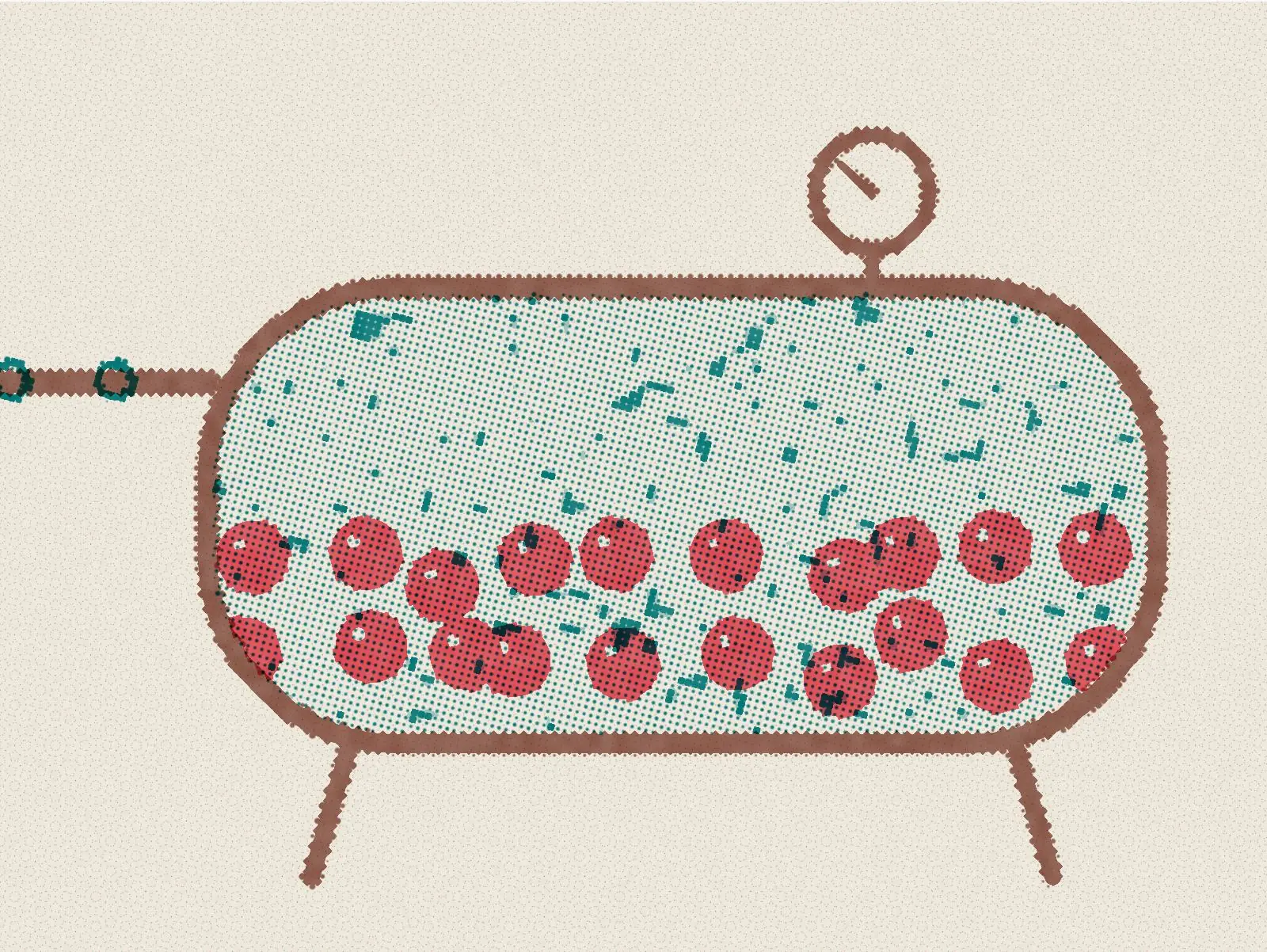
Harvested cherries, or pulped beans, are placed in sealable stainless-steel tanks or plastic containers. When fermentation begins, carbon dioxide is produced and pushes the oxygen in the container out. It is common to fit a one-way valve, so that gas can escape but air cannot get in.
In an oxygen-free environment, the kinds of microorganisms at work change. In ordinary open fermentation, yeasts and acetic acid bacteria dominate; in anaerobic conditions, lactic acid bacteria take over. The makeup of the acids and aroma compounds produced changes, and so does the flavor that appears in the cup.
Fermentation lasts from twenty-four hours to, in long cases, more than a hundred and twenty. Temperature and time control decide the quality.
Inside the tank
Waiting for an oxygen-free state, or creating one
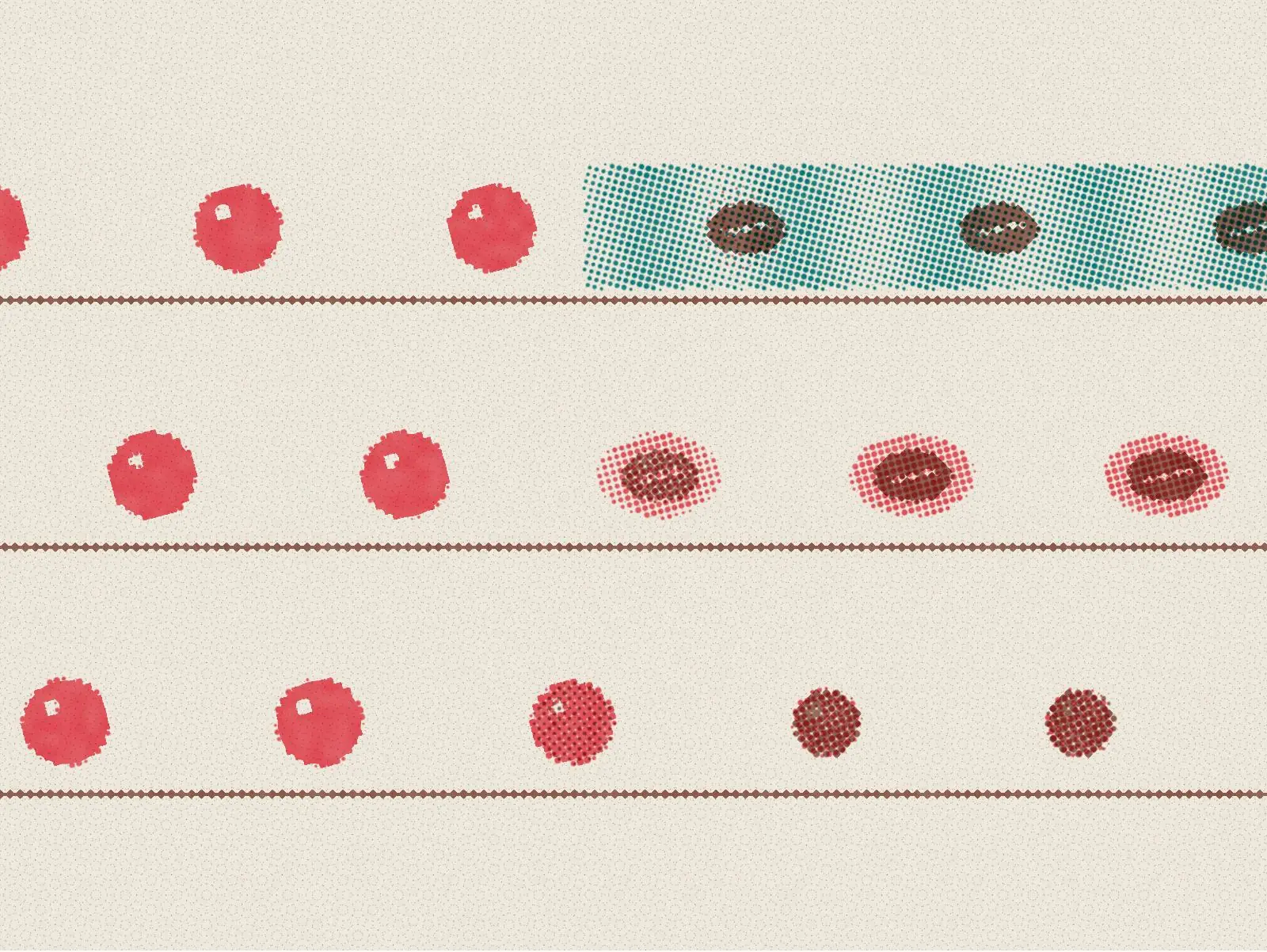
- 1. Just sealed
- 2. Early fermentation
- 3. Later fermentation
Anaerobic
Wait for the oxygen to leave
Air (oxygen) still remains in the space at the top of the tank.
Carbonic Maceration
Drive the oxygen out from the start
Carbon dioxide is injected before sealing, driving the oxygen out.
What happens
Anaerobic beans often taste "obviously different". Spices like cinnamon and clove, aged fruit, yogurt-like lactic nuances, sometimes elements reminiscent of whisky or fermented drinks.
This strong character is also why opinions divide. There is persistent criticism that the characteristics of origin and variety are hidden under fermentation flavors. The remark that "Anaerobic coffees from every origin taste alike" really is on target at times.
Related techniques
Carbonic Maceration injects carbon dioxide into the tank to create an oxygen-free environment from the start. It adapts a method known from winemaking, especially young wine in France's Beaujolais region, and became widely known after it was used at the 2015 World Barista Championship.
Experiments continue too, such as deliberately adding particular yeasts or lactic acid bacteria, or combining several rounds of fermentation. These are sorted out in Fermentation and special processes and Double Fermentation.
How to approach it
Anaerobic greatly widened the area in which producers can actively intervene in flavor. It cannot be ignored that it has become a way for small producers, who cannot change their altitude or variety, to gain bargaining power on price.
On the other hand, this technique demands investment in equipment and precise management. Seal something up by imitation and leave it, and you simply get rotten beans. The label "Anaerobic" alone does not guarantee quality; that is something buyers need to keep in mind.
The Robusta we carry from Lâm Hà in Lâm Đồng province also includes lots finished as Anaerobic. How does fruit from fermentation change the impression of Robusta's weight and bitterness? These are lots we want to use to test what this technique can do.